SS-4 Line 11: A Document Checklist for the Business Start Date
· 6 min read
The practical answer
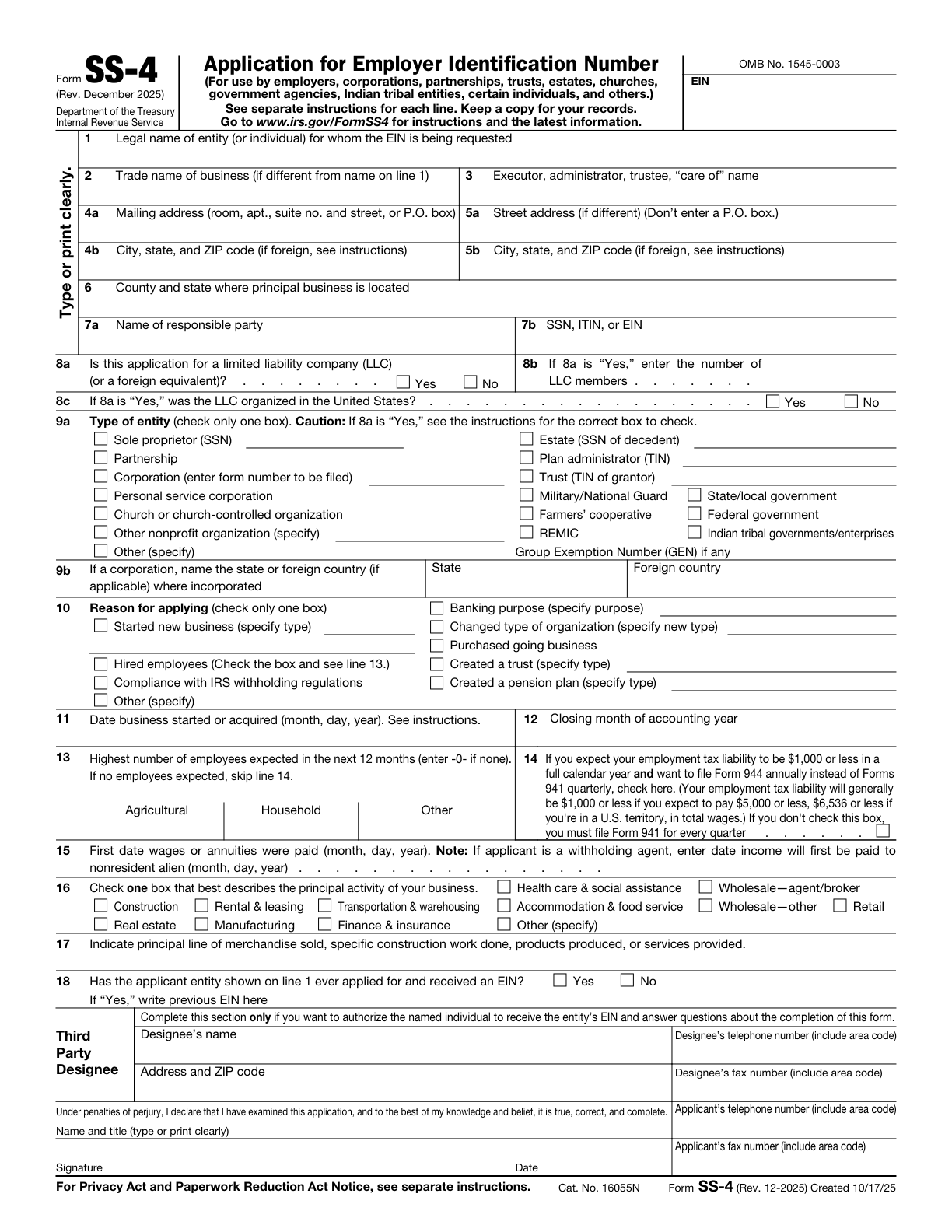
Formation, acquiring a business, and beginning operations can leave different dates in the same company file. A date on the first document in the folder should not become the start-date answer simply because it is easy to find. Enter the relevant start date for the actual formation, acquisition or ownership-change circumstances. A foreign applicant checks the instructions for when its U.S. business began or was acquired.[1, p.1] [2, p.5]
Scope and the records behind the answer
The discussion follows the entity, form and transaction conditions identified below. The same label on a different form can have a different purpose. Keep the relevant entity and reporting period visible while you compare the requirements, and treat each stated exception as part of the rule rather than an optional footnote.
Official sources checked: 2026-11-09. Annual tax-year forms and continuously revised forms are identified separately in the references.
A side-by-side preparation table
| Item or question | Official rule or instruction | Conditions and limits | Source |
|---|---|---|---|
| Field/section 11: Date business started or acquired (month, day, year) | Enter the relevant start date for the actual formation, acquisition or ownership-change circumstances. A foreign applicant checks the instructions for when its U.S. business began or was acquired. | Apply this entry within the entity, form and period described here; read the cited passage for the surrounding context. | [1, p.1] [2, p.5] |
| Field/section 12: Closing month of accounting year | Enter the final month of the accounting or tax year. Use of the same form does not mean every applicant has a December year-end. | Apply this entry within the entity, form and period described here; read the cited passage for the surrounding context. | [1, p.1] [2, p.5] |
| Reason required | Select one, and only one, reason for applying on line 10. Do not enter N/A. | Apply this entry within the entity, form and period described here; read the cited passage for the surrounding context. | [2, p.5] |
| Authorized signer | The authorized SS-4 signer depends on the type of applicant. A foreign applicant may use a person with appropriate authorization to sign. | Apply this entry within the entity, form and period described here; read the cited passage for the surrounding context. | [2, p.6] |
| Designee scope | The third-party designee may answer questions about the completed SS-4 and receive the new EIN. Signed authorization is required, and that authority ends when the EIN is assigned and released to the designee. | Apply this entry within the entity, form and period described here; read the cited passage for the surrounding context. | [2, p.6] |
| Legal name | Line 1 requires the applicant's legal name, consistent with the applicable Social Security card, formation document or other legal document. | Apply this entry within the entity, form and period described here; read the cited passage for the surrounding context. | [2, p.2] |
Work through the official requirements
Field/section 11: Date business started or acquired (month, day, year)
Enter the relevant start date for the actual formation, acquisition or ownership-change circumstances. A foreign applicant checks the instructions for when its U.S. business began or was acquired.[1, p.1] [2, p.5]
Field/section 12: Closing month of accounting year
Enter the final month of the accounting or tax year. Use of the same form does not mean every applicant has a December year-end.[1, p.1] [2, p.5]
Reason required
Select one, and only one, reason for applying on line 10. Do not enter N/A.[2, p.5]
Authorized signer
The authorized SS-4 signer depends on the type of applicant. A foreign applicant may use a person with appropriate authorization to sign.[2, p.6]
Designee scope
The third-party designee may answer questions about the completed SS-4 and receive the new EIN. Signed authorization is required, and that authority ends when the EIN is assigned and released to the designee.[2, p.6]
Legal name
Line 1 requires the applicant's legal name, consistent with the applicable Social Security card, formation document or other legal document.[2, p.2]
No employees line15
For the ordinary employer branch, line 15 asks for the first date wages or annuities were paid, with N/A entered if no employees are planned. An applicant acting as a withholding agent follows the separate instruction for the date payments to nonresident aliens begin.[2, p.6]
This applies when: The ordinary employer and withholding-agent branches are separate; having no employees does not eliminate an applicable withholding-agent date requirement.
Not entity election
Checking an entity-type box on SS-4 is not itself an entity-classification tax election.[2, p.4]
Activity specific
Choose the single category best describing the principal activity on line 16, then describe that activity more specifically on line 17.[2, p.6]
An illustrative preparation scenario
In this hypothetical preparation example, an owner supplies a formation certificate and a later business-purchase agreement. A website launch appears in another record. The preparer builds a short timeline, labels what each date represents, and checks which event the SS-4 instruction is asking the applicant to report. The preparer checks three points: What does each date in the file represent? Was the business started or acquired? Which document supports the date entered on line 11? The file remains a working comparison until the relevant facts and applicable instructions have been checked together. No agency outcome is assumed.[1, p.1] [2, p.5]
This is a planning illustration, not a statement that a particular filing has been accepted or that an entity qualifies for a tax result. Use the source-backed distinctions above to decide what information still needs to be established before a form is completed.
A review sequence you can actually use
- What does each date in the file represent?
- Was the business started or acquired?
- Which document supports the date entered on line 11?
Write down the answer and the record that supports it, rather than marking a question complete because a field contains text. When two records disagree, identify whether the difference concerns the entity, an individual, the reporting period or the type of change. That makes the remaining question specific enough to resolve against the relevant instruction.
Keep the scope of a preparation service separate from the government requirement. A service intake question may gather information for a workflow; it does not create an exception, extend a deadline or determine whether a transaction is reportable. The cited government material remains the basis for those conclusions.
Questions to settle before moving forward
How should I check reason required?
Select one, and only one, reason for applying on line 10. Do not enter N/A. [2, p.5]
How should I check authorized signer?
The authorized SS-4 signer depends on the type of applicant. A foreign applicant may use a person with appropriate authorization to sign. [2, p.6]
How should I check designee scope?
The third-party designee may answer questions about the completed SS-4 and receive the new EIN. Signed authorization is required, and that authority ends when the EIN is assigned and released to the designee. [2, p.6]
How should I check legal name?
Line 1 requires the applicant's legal name, consistent with the applicable Social Security card, formation document or other legal document. [2, p.2]
Official sources and versions
- Form SS-4 (Rev. December 2025) — Rev. December 2025
- Instructions for Form SS-4 (Rev. December 2025) — Rev. December 2025
Get help with the relevant SpeedEIN workflow
SpeedEIN offers preparation and support for the situations described on its service pages. If you would like assistance, review the relevant service scope, supported entities and current availability before ordering. The service does not replace the government’s decision or remove an obligation imposed by the applicable rules.