A Foreign TIN Is Not the Same as a Form 5472 Reference ID
· 6 min read
The practical answer
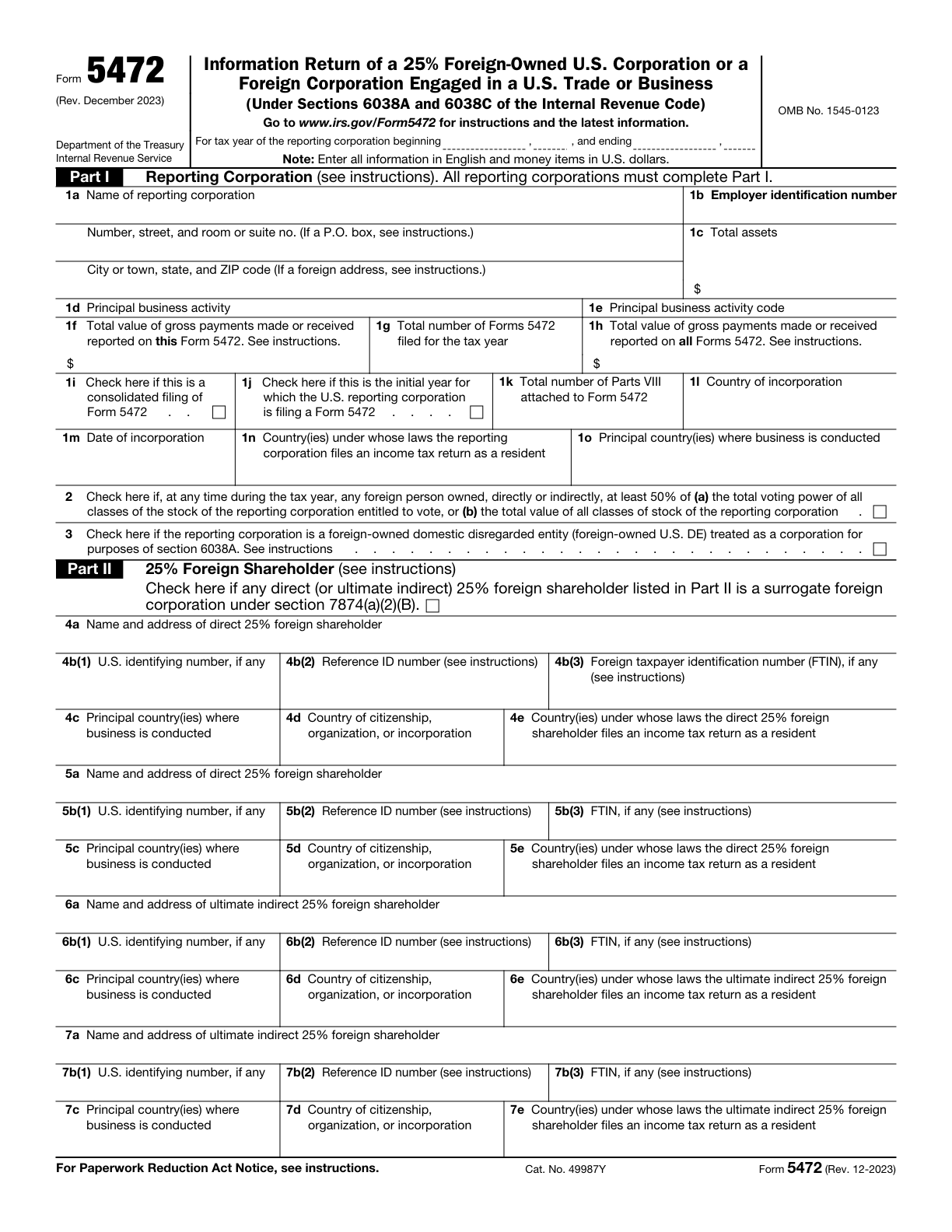
A foreign tax identification number and a reporting reference ID have different origins. Label them clearly in the working file so that a number issued by a foreign jurisdiction is not confused with an identifier maintained for the reporting process. When the applicable foreign shareholder has no U.S. identifying number entered in Part II, use the reference ID required by the instructions. The reporting entity or its representative creates this ID; it is not a separate IRS application.[1, p.5] [1, p.4] [2, p.1]
Scope and the records behind the answer
The discussion follows the entity, form and transaction conditions identified below. The same label on a different form can have a different purpose. Keep the relevant entity and reporting period visible while you compare the requirements, and treat each stated exception as part of the rule rather than an optional footnote.
Official sources checked: 2026-11-09. Annual tax-year forms and continuously revised forms are identified separately in the references.
A side-by-side preparation table
| Item or question | Official rule or instruction | Conditions and limits | Source |
|---|---|---|---|
| De ftin none | A foreign-owned U.S. DE reports its direct and ultimate foreign owners' FTINs, if any. If an owner has no FTIN, enter "None" or "N/A" in that field. Different reporting-entity rules must be checked separately. | Foreign-owned U.S. disregarded entity. | [1, p.5] |
| Reference id when missing us id | When the applicable foreign shareholder has no U.S. identifying number entered in Part II, use the reference ID required by the instructions. The reporting entity or its representative creates this ID; it is not a separate IRS application. | Apply this entry within the entity, form and period described here; read the cited passage for the surrounding context. | [1, p.4] |
| Field/section 4b(3): Foreign taxpayer identification number (FTIN), if any | A foreign-owned U.S. DE enters the foreign owner's FTIN, if any, or "None" or "N/A" when there is none. Check the different rules for other filers. | Apply this entry within the entity, form and period described here; read the cited passage for the surrounding context. | [2, p.1] [1, p.5] |
| Field/section 8b(3): FTIN, if any (see instructions) | Enter the related party's FTIN, if any, consistently with its identification records. | Apply this entry within the entity, form and period described here; read the cited passage for the surrounding context. | [2, p.2] |
| Field/section 4b(1): U.S. identifying number, if any | If there is a U.S. identifying number, enter an SSN or ITIN for an individual, or an EIN for another entity. | Apply this entry within the entity, form and period described here; read the cited passage for the surrounding context. | [2, p.1] [1, p.4] |
Work through the official requirements
De ftin none
A foreign-owned U.S. DE reports its direct and ultimate foreign owners' FTINs, if any. If an owner has no FTIN, enter "None" or "N/A" in that field. Different reporting-entity rules must be checked separately.[1, p.5]
This applies when: Foreign-owned U.S. disregarded entity.
Reference id when missing us id
When the applicable foreign shareholder has no U.S. identifying number entered in Part II, use the reference ID required by the instructions. The reporting entity or its representative creates this ID; it is not a separate IRS application.[1, p.4]
Field/section 4b(3): Foreign taxpayer identification number (FTIN), if any
A foreign-owned U.S. DE enters the foreign owner's FTIN, if any, or "None" or "N/A" when there is none. Check the different rules for other filers.[2, p.1] [1, p.5]
Field/section 8b(3): FTIN, if any (see instructions)
Enter the related party's FTIN, if any, consistently with its identification records.[2, p.2]
Field/section 4b(1): U.S. identifying number, if any
If there is a U.S. identifying number, enter an SSN or ITIN for an individual, or an EIN for another entity.[2, p.1] [1, p.4]
An illustrative preparation scenario
In this hypothetical preparation example, an owner supplies a foreign tax notice and an internal reference label used by a previous preparer. Both are listed under tax ID in the notes. The review separates them by purpose and checks the form's distinct fields, including the applicable treatment when an FTIN is absent. The preparer checks three points: Who issued the foreign tax number? Who maintains the reporting reference ID? What does each separate field require? The file remains a working comparison until the relevant facts and applicable instructions have been checked together. No agency outcome is assumed.[1, p.5] [1, p.4] [2, p.1]
In a different hypothetical identification file, the owner submits a tax certificate from a foreign jurisdiction and a reference label created in the reporting records. Both contain letters and numbers, so their appearance alone cannot identify their roles. The reviewer records the issuer and source document for the foreign TIN, and the maintained person-to-reference mapping for the reporting ID. If a number is absent, that becomes a field-specific instruction check rather than permission to move the other identifier into its place. Extend the file with a source column for each identifier: the foreign tax certificate and issuing authority for the FTIN, and the earlier reporting record or maintained register for the reference ID. Preserve the document's wording and identify which person's number it describes before copying it into a form field. Missing evidence and a confirmed absence of a number are different preparation questions. Check the applicable field instruction before deciding what an absent-number entry should say, while keeping the two identifiers separately labelled.[1, p.5] [1, p.4] [2, p.1]
This is a planning illustration, not a statement that a particular filing has been accepted or that an entity qualifies for a tax result. Use the source-backed distinctions above to decide what information still needs to be established before a form is completed.
A review sequence you can actually use
- Who issued the foreign tax number?
- Who maintains the reporting reference ID?
- What does each separate field require?
Write down the answer and the record that supports it, rather than marking a question complete because a field contains text. When two records disagree, identify whether the difference concerns the entity, an individual, the reporting period or the type of change. That makes the remaining question specific enough to resolve against the relevant instruction.
Keep the scope of a preparation service separate from the government requirement. A service intake question may gather information for a workflow; it does not create an exception, extend a deadline or determine whether a transaction is reportable. The cited government material remains the basis for those conclusions.
Questions to settle before moving forward
How should I check field/section 4b(3): foreign taxpayer identification number (ftin), if any?
A foreign-owned U.S. DE enters the foreign owner's FTIN, if any, or "None" or "N/A" when there is none. Check the different rules for other filers. [2, p.1] [1, p.5]
How should I check field/section 8b(3): ftin, if any (see instructions)?
Enter the related party's FTIN, if any, consistently with its identification records. [2, p.2]
How should I check field/section 4b(1): u.s. identifying number, if any?
If there is a U.S. identifying number, enter an SSN or ITIN for an individual, or an EIN for another entity. [2, p.1] [1, p.4]
Official sources and versions
- Instructions for Form 5472 (Rev. December 2024) — Rev. December 2024
- Form 5472 (Rev. December 2023) — Rev. December 2023
Get help with the relevant SpeedEIN workflow
SpeedEIN offers preparation and support for the situations described on its service pages. If you would like assistance, review the relevant service scope, supported entities and current availability before ordering. The service does not replace the government’s decision or remove an obligation imposed by the applicable rules.