An Earlier Preparer Missed the Filing: Document the Facts Before a Relief Review
· 6 min read
The answer for this situation
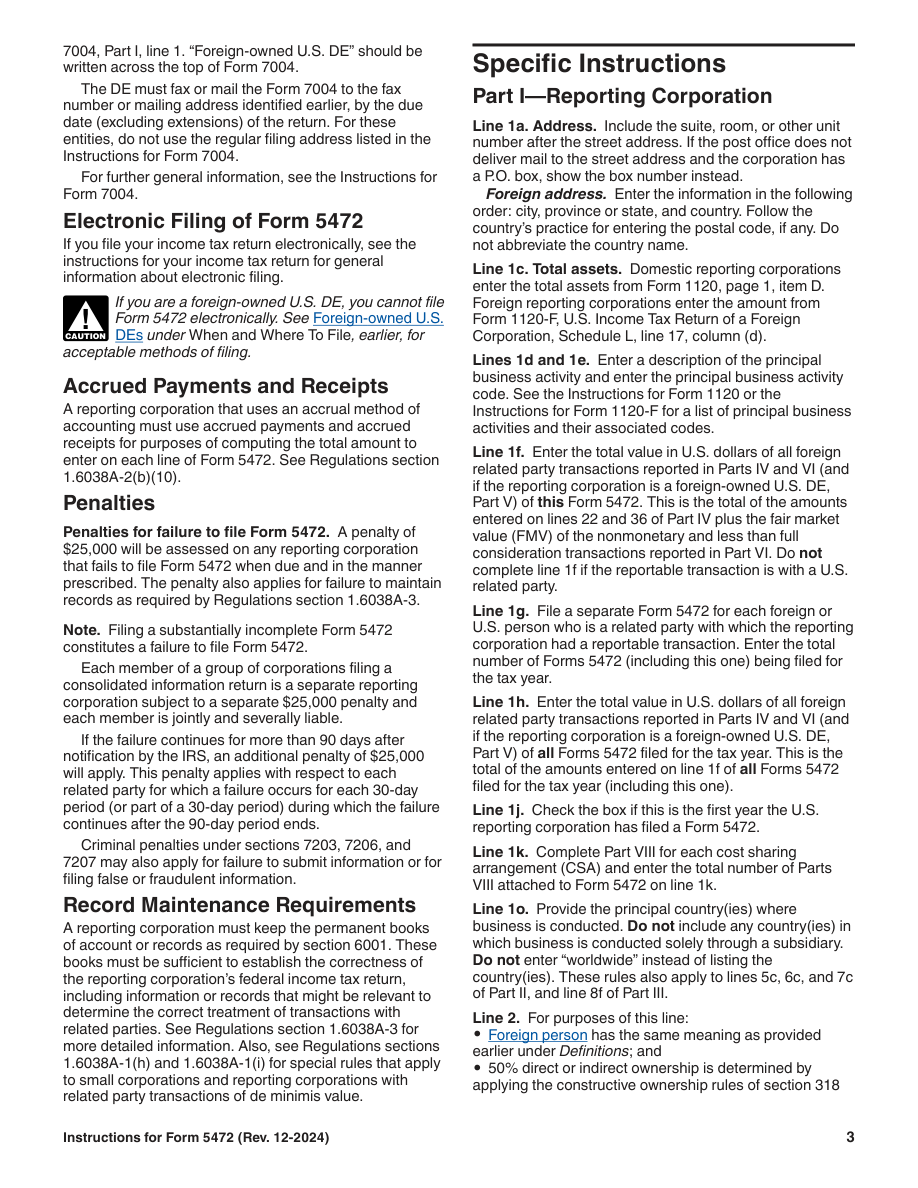
If an earlier preparer appears to have missed a filing, build a factual chronology before turning the situation into a penalty-relief conclusion. Record what work was agreed, what information was supplied, which follow-up occurred and when the possible omission was discovered. Reliance on a professional is part of the circumstances to examine; it is not an automatic answer to the reasonable-cause question. A useful chronology points to contemporaneous records and keeps the owner's later explanation distinguishable from what was documented at the time. It should also leave room for uncertainty about whether the issue was a missing filing, a substantially incomplete one or a misunderstanding about the work undertaken. The output is evidence organized for appropriate review, not a template accusation or a guarantee that the earlier preparer's involvement removes exposure.[1] [2, p.3]
Which facts change the answer?
The selected rules describe a case-by-case review of reasonable cause and good faith, including whether professional reliance was reasonable in the circumstances. A written assertion of reasonable cause has its own factual and declaration requirements; submitting it does not prove that relief has been approved. The internal IRS recommendation concerning delinquent returns also needs to be described accurately, rather than converted into a new absolute statutory rule. This article does not decide professional liability, draft a definitive relief statement or determine that the owner's account is sufficient without examining the records.[1] [2, p.3]
The official requirements, compared
| Question or field | Official instruction | Conditions and limits | Source |
|---|---|---|---|
| Reasonable cause case by case | Reasonable cause and good faith are evaluated case by case using all relevant facts. Reliance on an accountant, attorney or another professional does not necessarily establish them; that reliance must be reasonable under all the circumstances. | The IRS is reviewing reasonable cause and good faith for a section 6038A failure. | [1] |
| Reasonable cause perjury statement | To assert reasonable cause, the reporting corporation affirmatively states in writing all facts relied on and includes a declaration under penalties of perjury. The IRS determines whether reasonable cause exists and the period to which it applies. | Reasonable-cause treatment is being asserted for a section 6038A failure. Submitting a statement does not itself mean that penalty relief has been approved. | [1] |
| Records sufficiency | Keep permanent books and records sufficient to establish the correctness of the federal return and the treatment of related-party transactions, together with the detailed requirements of Regulations section 1.6038A-3. | — | [2, p.3] |
| Reasonable cause delinquent returns recommendation | For review of an initial Form 5472 penalty, the IRM recommends not considering reasonable cause for any year until all delinquent returns have been filed. This is an internal IRS review recommendation, and filing the returns does not guarantee relief. | This concerns reasonable-cause review of an initial Form 5472 penalty. The IRM says recommended; do not rewrite this as an independent absolute statutory prerequisite or a condition that guarantees approval. | [3] |
| Failure penalty | Failure to file Form 5472 at the prescribed time and in the prescribed manner, or to maintain required records, can result in a $25,000 penalty. A substantially incomplete form is treated as a failure to file. | — | [2, p.3] |
| Substantially incomplete is failure | A substantially incomplete Form 5472 is treated as a failure to file. Information under Regulations section 1.6038A-2(b)(3) through (5) that is expressly not required does not, solely by its omission, make a filing substantially incomplete. | The Form 5472 filing obligation applies. Distinguish a substantially incomplete filing from fields that are not legally required. | [1] |
Read the requirements in context
Cp215 assessment notice
The Form 5472 IRM procedure states that an assessment using MFT 13 and PRN 625 generates and sends a BMF CP 215 penalty notice. This is a post-assessment procedure.[3]
When this applies: This concerns an MFT 13/PRN 625 assessment under IRM 20.1.9.5.2.
Limits to keep: Different processing routes may use different PRNs; this does not establish one identical notice code for every Form 5472 case.
Penalty qualifying failures
For an applicable reporting corporation, failure to furnish section 6038A information at the prescribed time and in the prescribed manner, maintain required records, or satisfy the foreign-record requirements can trigger an initial $25,000 penalty per tax year, subject to the related-party rules.[1] [3]
When this applies: An applicable section 6038A filing or recordkeeping obligation and a corresponding failure must exist. The $25,000 amount here applies to tax years beginning on or after January 1, 2018.
Limits to keep: Reasonable cause requires a separate review; do not describe the penalty as automatically and unconditionally applying to every LLC. The amount differs for tax years beginning before January 1, 2018.
A worked preparation example
This example is hypothetical; it shows how to organize the facts, not an agency decision.
Imagine a hypothetical owner who believed an annual filing was included in a previous engagement, then discovers a notice while changing service providers. The owner has an order confirmation, messages supplying some information and a draft saved in a shared folder. A chronology first distinguishes what the engagement actually described from the broader work the owner thought it covered. It then records when information was requested and supplied, what follow-up messages said and which version of the draft was available. A message saying preparation complete is not silently rewritten as confirmation of submission. If the owner cannot find a requested item, that gap remains visible rather than being omitted to make the story stronger. The notice is added as a separate documented event, and the discovery of the possible failure is distinguished from the date of the notice itself. An appropriate reviewer can then examine the relevant circumstances and identify what further facts are needed. This hypothetical chronology does not label the reliance reasonable, promise relief or establish that every act was the preparer's responsibility. Its value is that it makes the account testable against the underlying record.[1] [2, p.3]
Turn the records into a usable filing plan
Write the chronology neutrally and use precise descriptions of the records. An inference, a recollection and a dated message should not be presented as if they were the same kind of evidence. Keep information that may complicate the account visible for the reviewer, rather than selecting only documents that support a preferred conclusion. Separately list any delinquent returns or incomplete preparation tasks so the filing work can be scoped without assuming it settles the relief question. SpeedEIN's supported late-return preparation does not by itself include a notice dispute, a reasonable-cause determination or a professional-negligence claim. Ask about the actual preparation service using the established entity and year information, and obtain appropriate review for the relief issue. No provider can turn the existence of an earlier engagement into a guaranteed IRS result simply by attaching a chronology to a new order.[1] [2, p.3]
Three checks before you proceed
- What work was actually agreed, which information was supplied and what records support the sequence?
- Have preparation, reported submission and later discovery been kept distinct without improving uncertain facts?
- Which filing tasks and relief-review questions require separate work, rather than treating professional involvement as automatic reasonable cause?
Related preparation guides
- Several Form 5472 Failures in One Year: Count Related Parties Before Estimating Exposure
- A CP215 Assessment and a Continuing-Failure Notice: Keep the Two Timelines Separate
- Reasonable-Cause Statements and Penalty Relief Require Separate Review
Official sources and document versions
Official source versions checked: 2026-11-10
- 26 CFR 1.6038A-4 Monetary penalty for failure to furnish information or maintain records — 2026-11-05
- Instructions for Form 5472 (Rev. December 2024) — Rev. December 2024
- Part 20. Penalty and Interest
Get help with the relevant SpeedEIN service
SpeedEIN provides preparation and support within the scope described on its service pages. Review the supported entity types, required information and current service scope before ordering. IRS decisions, processing and any applicable filing or payment obligations remain governed by the official rules.