A CP215 Assessment and a Continuing-Failure Notice: Keep the Two Timelines Separate
· 7 min read
The answer for this situation
Record what each IRS document does before using its date in a continuing-failure calculation. A CP215 associated with the cited assessment procedure concerns an assessment event; the regulation's continuing-failure framework has its own notice and timing conditions. Do not assume that every assessment date, delivery date and relevant failure-notice mailing date are interchangeable. A notice register can identify the document, the period and issue it concerns, the date actually evidenced and the action its contents call for. Connect related documents without collapsing their roles into one generic IRS letter. This gives an appropriate reviewer a reliable chronology and preserves uncertainty where the file does not establish the relevant event. It is not a substitute for interpreting the actual correspondence or the applicable rules.[1] [2] [3, p.3]
Which facts change the answer?
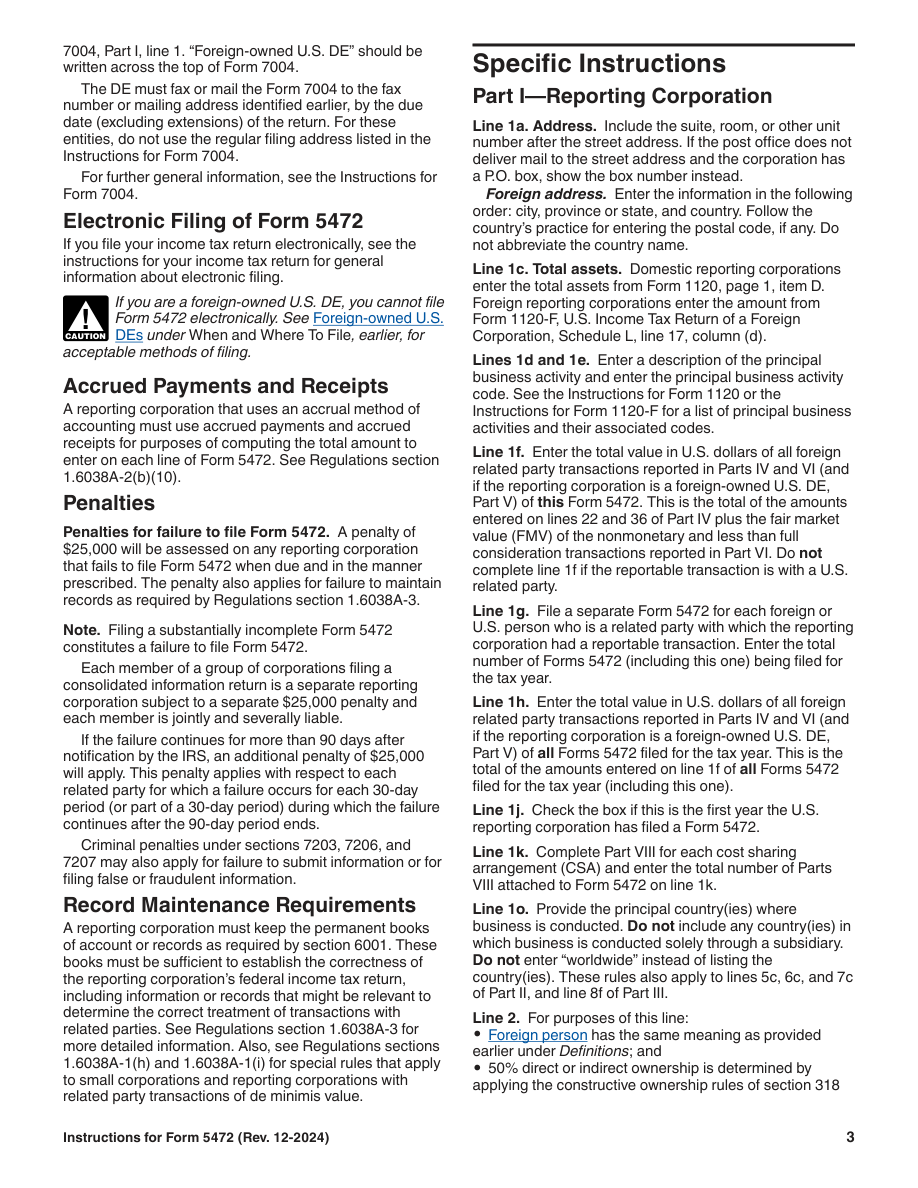
The cited CP215 procedure concerns its specified assessment context and does not establish one processing code for every Form 5472 case. The continuing-failure rules retain their stated conditions, tax-year limits and reasonable-cause qualifications. In particular, a relief request does not itself show that the IRS determined a reasonable-cause period or that a clock has stopped. This article does not calculate a response date from a partial image, determine the duration of reasonable cause or assume that two labels always require two different physical letters. The actual notice text and supported mailing history need their own review.[1] [2] [3, p.3]
The official requirements, compared
| Question or field | Official instruction | Conditions and limits | Source |
|---|---|---|---|
| Cp215 assessment notice | The Form 5472 IRM procedure states that an assessment using MFT 13 and PRN 625 generates and sends a BMF CP 215 penalty notice. This is a post-assessment procedure. | This concerns an MFT 13/PRN 625 assessment under IRM 20.1.9.5.2. Different processing routes may use different PRNs; this does not establish one identical notice code for every Form 5472 case. | [1] |
| Continuation penalty notice clock | If the relevant failure continues more than 90 days after the IRS mails a failure notice, an additional $25,000 may apply for each affected related party for each 30-day period. A fraction of 30 days counts as a full period. | The relevant failure continues more than 90 days after the IRS mails its notice. The amount here applies to tax years beginning on or after January 1, 2018. The relevant clock starts with the IRS mailing the failure notice; do not accrue this additional penalty directly from the original filing due date. Determine the reasonable-cause period and treatment of a second failure under Regulations section 1.6038A-4(b) and (d), respectively. Under Regulations section 1.6038A-4(b)(1), the 90-day period cannot begin earlier than the last day on which the IRS determines that reasonable cause existed. The IRS determines reasonable cause and its duration; making a request does not automatically stop the clock. | [2] |
| Continuing failure penalty | If failure continues more than 90 days after IRS notification, the instructions provide an additional $25,000 for each related party affected, for each subsequent 30-day period or fraction of a period during which failure continues. | The failure continues more than 90 days after IRS notification. Under Regulations section 1.6038A-4(b)(1), the 90-day period cannot begin earlier than the last day on which the IRS determines that reasonable cause existed. The IRS determines reasonable cause and its duration; making a request does not automatically stop the clock. | [3, p.3] [2] |
| Failure penalty | Failure to file Form 5472 at the prescribed time and in the prescribed manner, or to maintain required records, can result in a $25,000 penalty. A substantially incomplete form is treated as a failure to file. | — | [3, p.3] |
| Initial penalty once related party year | The initial penalty is imposed only once for each related party and tax year, even if both filing and record-maintenance failures concern that same related party. Additional continuing-failure penalties follow their separate rules. | This concerns the initial penalty for the same related party and tax year. Do not extend the initial-penalty aggregation rule into an overall cap on continuing-failure penalties. | [1] [2] |
| Records sufficiency | Keep permanent books and records sufficient to establish the correctness of the federal return and the treatment of related-party transactions, together with the detailed requirements of Regulations section 1.6038A-3. | — | [3, p.3] |
Read the requirements in context
Reasonable cause case by case
Reasonable cause and good faith are evaluated case by case using all relevant facts. Reliance on an accountant, attorney or another professional does not necessarily establish them; that reliance must be reasonable under all the circumstances.[2]
When this applies: The IRS is reviewing reasonable cause and good faith for a section 6038A failure.
Reasonable cause perjury statement
To assert reasonable cause, the reporting corporation affirmatively states in writing all facts relied on and includes a declaration under penalties of perjury. The IRS determines whether reasonable cause exists and the period to which it applies.[2]
When this applies: Reasonable-cause treatment is being asserted for a section 6038A failure.
Limits to keep: Submitting a statement does not itself mean that penalty relief has been approved.
A worked preparation example
This example is hypothetical; it shows how to organize the facts, not an agency decision.
Suppose a hypothetical owner finds a CP215 copy and an email mentioning an earlier IRS letter. The email includes a received-on date but no complete copy of the earlier correspondence. Instead of using the CP215 date as the start of every calculation, the owner creates separate register entries for the assessment copy and the unresolved earlier notice reference. Each entry records what the document actually identifies, which date is printed or otherwise supported and what remains missing. The owner preserves the complete available correspondence, including pages that explain the issue and actions, rather than keeping only the amount shown at the top. If a reasonable-cause request was sent, it is recorded as a request, with no automatic notation that continuing exposure ended on that day. A reviewer can then investigate whether the relevant failure notice and its mailing event are established and how the regulatory qualifications apply. The owner does not infer from silence that the IRS approved relief. This hypothetical register separates facts from assumptions and gives the reviewer a specific missing-document question; it does not calculate a final penalty or decide that the CP215 copy can never be relevant to another notice issue.[1] [2] [3, p.3]
Turn the records into a usable filing plan
Give each date a label that says what happened, such as date shown on document, reported receipt date or supported mailing event. Avoid a single unlabeled notice date column that invites later readers to treat every event the same way. Keep proposed next actions linked to the actual correspondence and identify who is reviewing any timing question. Do not postpone reading a notice's instructions merely because a separate return-preparation task is underway. Equally, do not invent a standard response period where the available material does not establish one. SpeedEIN's supported late-return work is distinct from notice interpretation, a penalty dispute or a relief determination. The register helps separate those workstreams and preserve the record for qualified review, while avoiding a promise that making a request or preparing a filing will stop a clock or remove an assessment.[1] [2] [3, p.3]
Three checks before you proceed
- What role does each document actually establish, and which tax year or failure does it concern?
- Are assessment, mailing and receipt dates separately labelled rather than used interchangeably in a calculation?
- Has any reasonable-cause period or timing conclusion been supported by the applicable review instead of inferred from sending a request?
Related preparation guides
- An Earlier Preparer Missed the Filing: Document the Facts Before a Relief Review
- Several Form 5472 Failures in One Year: Count Related Parties Before Estimating Exposure
- A CP215 Assessment: Preserve the Notice, Tax Year, and Filing Evidence
Official sources and document versions
Official source versions checked: 2026-11-10
- Part 20. Penalty and Interest
- 26 CFR 1.6038A-4 Monetary penalty for failure to furnish information or maintain records — 2026-11-05
- Instructions for Form 5472 (Rev. December 2024) — Rev. December 2024
Get help with the relevant SpeedEIN service
SpeedEIN provides preparation and support within the scope described on its service pages. Review the supported entity types, required information and current service scope before ordering. IRS decisions, processing and any applicable filing or payment obligations remain governed by the official rules.