Moving From an Individual Business to an LLC: Reconcile the Applicant and Earlier EIN
· 5 min read
The answer for this situation
An individual who has operated a business before forming an LLC may have an earlier EIN and a familiar trading name. Those facts need to be preserved, but they should not be copied into a new application without identifying the applicant. A sensible first step is a before-and-after taxpayer file. It records the individual business, the newly formed LLC and the existing numbers associated with each. This makes the new-EIN review concrete without announcing one universal answer for every transition. The important distinction is between the business activity continuing and the identity and filing facts the applicable IRS instructions actually ask about.[1] [2, p.2] [3, p.1]
Which facts change the answer?
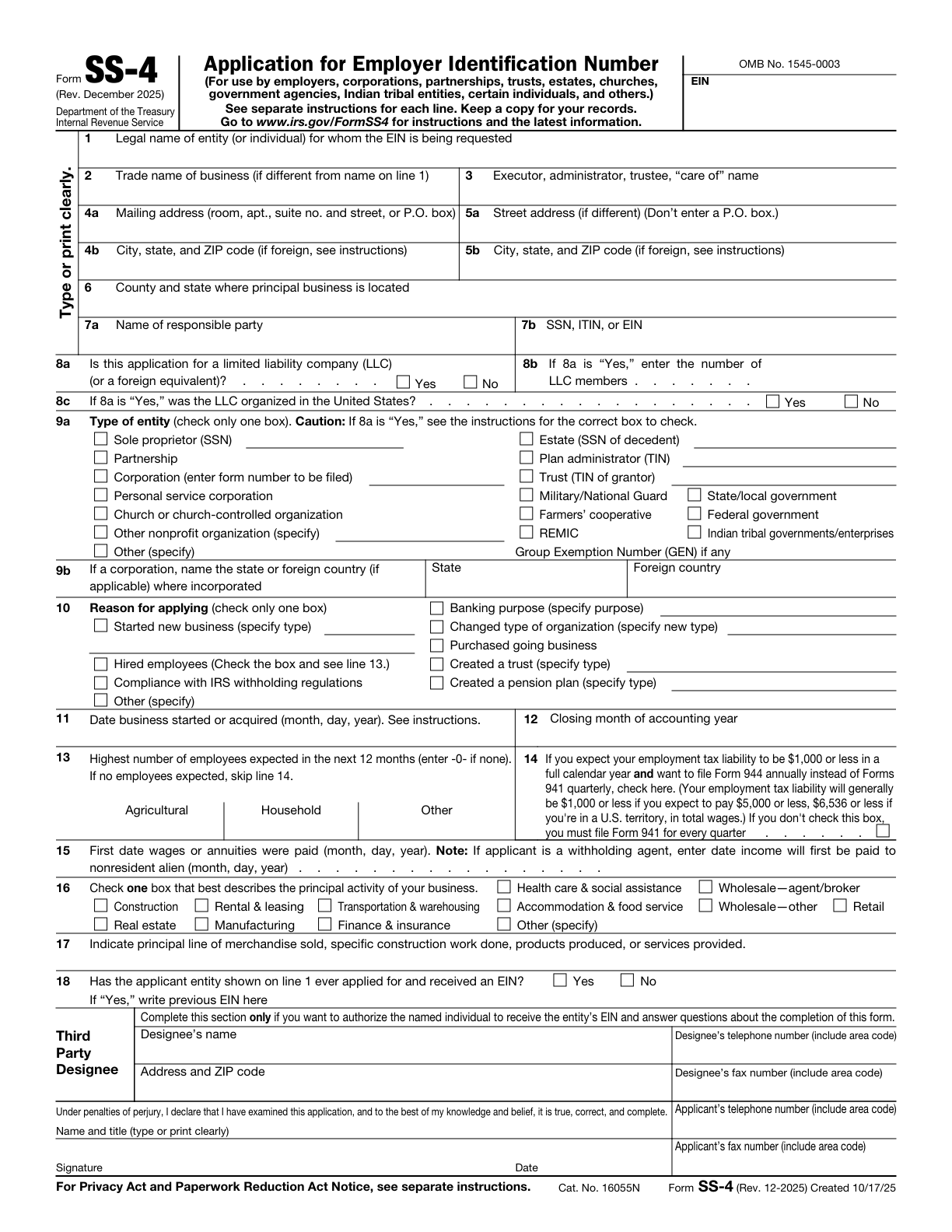
The IRS instructs someone forming an LLC to form it with the state before applying for an EIN. SS-4 asks for the applicant's legal name and whether that applicant previously received a number. Domestic single-member default classification, employee-related facts and a corporate-tax election are separate matters requiring their applicable rules. A permanent EIN cannot simply be renamed into a different taxpayer by an owner's shorthand, while an ownership or structure question should not be resolved from a name similarity alone. This guide gathers facts for review; it does not declare that every individual-business-to-LLC transition requires, or never requires, a new EIN.[1] [2, p.2] [3, p.1]
The official requirements, compared
| Question or field | Official instruction | Conditions and limits | Source |
|---|---|---|---|
| Form entity before ein | The IRS instructs someone creating a corporation or LLC to form the entity with the state before applying for an EIN. | This does not mean the state filing itself assigns an EIN. | [1] |
| Legal name | Line 1 requires the applicant's legal name, consistent with the applicable Social Security card, formation document or other legal document. | — | [2, p.2] |
| Previous ein disclosure | Line 18 asks whether the applicant previously received an EIN. If Yes, enter that prior EIN. | — | [3, p.1] |
| Default classification | A domestic single-member LLC generally defaults to an entity disregarded as separate from its owner; a domestic LLC with two or more members generally defaults to partnership classification. | — | [2, p.3] |
| Member count | If line 8a is Yes, enter the number of LLC members on line 8b. Spouses meeting the community-property conditions in the instructions may enter 1 as directed. | — | [2, p.3] |
| Ein deactivation not cancel | The IRS says an EIN cannot be cancelled, although it can be deactivated; once assigned to an entity it is that entity’s permanent federal taxpayer ID. | State dissolution is a separate agency action, not an automatic IRS deactivation. | [4] |
Read the requirements in context
No employees skip14
Line 13 asks for the highest expected number of employees in each category during the next 12 months, including zero. Skip line 14 if no employees are expected.[2, p.5]
Not entity election
Checking an entity-type box on SS-4 is not itself an entity-classification tax election.[2, p.4]
A worked preparation example
This example is hypothetical; it shows how to organize the facts, not an agency decision.
Imagine a hypothetical designer, Nina, who previously worked in her own name using an earlier business EIN. She later forms Clear Reed LLC but continues using the same website and customer-facing brand. When asked for company tax information, she forwards the older letter because the activity feels unchanged. Before another application proceeds, Nina makes a comparison file. The first row describes the earlier taxpayer and the document to which its EIN was assigned. The second describes the LLC exactly as shown on its formation record. She records ownership, the requested federal treatment, the worker facts relevant to the application and whether the LLC itself has already received an EIN. A shared brand or website is not used to answer the last question automatically. If an earlier provider handled work for the LLC, she retrieves that history rather than assuming the older personal-business letter is the only possible record. She then supplies the distinction to the person reviewing whether an application is needed and how its fields should be completed. The file preserves the previous number without treating disclosure as a universal instruction to reuse it for every LLC purpose. It also stops the owner's earlier experience from being mistaken for the new entity's own application history.[1] [2, p.2] [3, p.1]
Turn the records into a usable filing plan
Keep original assignment evidence attached to the taxpayer it identifies, and describe the transition without overwriting the earlier record. Clearly label unresolved questions such as whether the LLC has a pending application or which treatment has been chosen. Do not use SS-4 to make a corporate-tax election or infer a particular filing scope merely because one person owns both the old activity and the new company. SpeedEIN's application support should be requested after the actual applicant and prior-number facts are explained. Later annual or update work has its own requirements. A clear before-and-after file reduces avoidable confusion while leaving the applicable new-EIN conclusion to the instructions and the complete facts.[1] [2, p.2] [3, p.1]
Three checks before you proceed
- Which taxpayer does the earlier EIN assignment document actually identify?
- Has the new LLC itself previously received, or started an application for, an EIN?
- Have formation, ownership, treatment and employee facts been separated instead of inferred from a shared brand?
Related preparation guides
- A Foreign Parent and a U.S. LLC: Which Entity Is Applying for the EIN?
- Choosing Self-Preparation or Paid EIN Help: Compare the Work and Responsibility
- An LLC Ownership Change Needs a New-EIN Review, Not an Automatic Repeat Application
Official sources and document versions
Official source versions checked: 2026-11-10
- Get an employer identification number
- Instructions for Form SS-4 (Rev. December 2025) — Rev. December 2025
- Form SS-4 (Rev. December 2025) — Rev. December 2025
- If you no longer need your EIN
Get help with the relevant SpeedEIN service
SpeedEIN provides preparation and support within the scope described on its service pages. Review the supported entity types, required information and current service scope before ordering. IRS decisions, processing and any applicable filing or payment obligations remain governed by the official rules.