An Employment-Tax Filing Notice Arrives After the EIN: Compare It With the SS-4 Election
· 6 min read
The answer for this situation
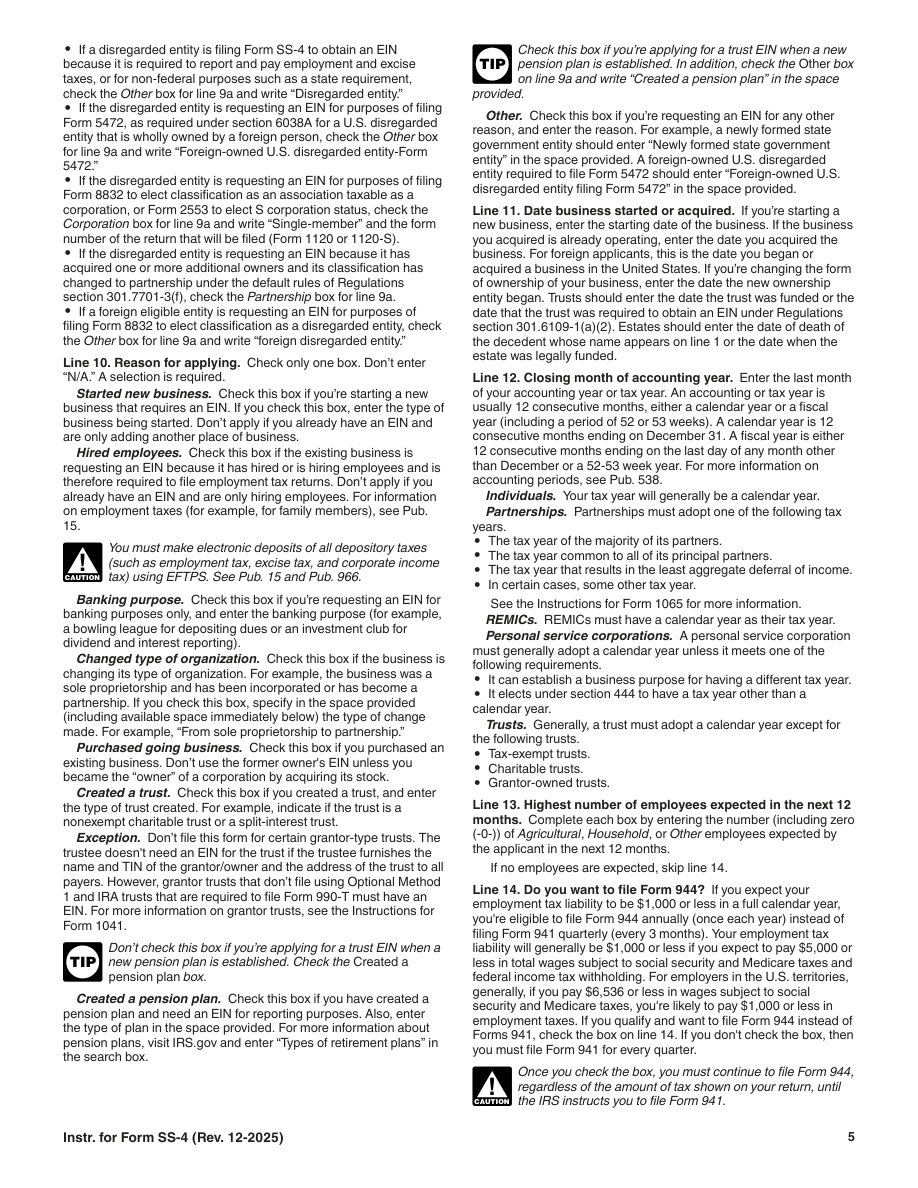
After an EIN is assigned, an owner may receive correspondence about an employment-tax filing and be surprised by the form named. The useful first step is a notice-to-application comparison, not a guess that the notice is wrong or that a new EIN will fix it. Retrieve the SS-4 version actually used, identify the employee forecast and any Form 944 choice, and keep the correspondence intact. This prepares a focused question about the existing account and filing instruction. It does not decide worker status, supply payroll calculations or make the owner's memory of the application more authoritative than the actual records.[1, p.5] [1, p.6]
Which facts change the answer?
SS-4 distinguishes the expected employee information from the line 14 Form 944 election and the relevant first-wage information. The stated Form 944 option has eligibility conditions, including expected employees and the specified annual employment-tax liability threshold. It is not a general small-business checkbox. Once selected under the instructions, the Form 944 filing requirement continues until the IRS instructs the employer to file Form 941. Do not use that rule to interpret every notice without examining what it actually says. A question about employee or contractor classification, an already issued account instruction or a payroll obligation may need appropriate separate advice beyond EIN application support.[1, p.5] [1, p.6]
The official requirements, compared
| Question or field | Official instruction | Conditions and limits | Source |
|---|---|---|---|
| Form944 election | An applicant expecting annual employment-tax liability of no more than $1,000 may select annual Form 944 filing under the line 14 instructions. Once selected, that filing requirement continues until the IRS instructs the employer to file Form 941. | Employees are expected. The applicant meets Form 944 eligibility requirements and elects that filing method. | [1, p.5] |
| No employees skip14 | Line 13 asks for the highest expected number of employees in each category during the next 12 months, including zero. Skip line 14 if no employees are expected. | — | [1, p.5] |
| No employees line15 | For the ordinary employer branch, line 15 asks for the first date wages or annuities were paid, with N/A entered if no employees are planned. An applicant acting as a withholding agent follows the separate instruction for the date payments to nonresident aliens begin. | The ordinary employer and withholding-agent branches are separate; having no employees does not eliminate an applicable withholding-agent date requirement. | [1, p.6] |
| Official field SS-4 13: Highest number of employees expected in the next 12 months (enter -0- if none) | Enter the highest expected number separately for Agricultural, Household and Other employees. Enter 0 where none are expected and skip line 14 when no employees are expected. | — | [2, p.1] [1, p.5] |
| Official field SS-4 14: If you expect your employment tax liability to be $1,000 or less | If employees are expected, check this box only when eligible and electing annual Form 944 rather than quarterly Form 941 filing. It is not a general box for an applicant without employees. | — | [2, p.1] [1, p.5] |
| Official field SS-4 15: First date wages or annuities were paid (month, day, year) | Under the ordinary employer branch, enter the first wage or annuity payment date, or N/A if no employees are planned. An applicant acting as a withholding agent separately follows the instruction for when payments to nonresident aliens begin. | The ordinary employer and withholding-agent branches are distinct; having no employees does not remove an applicable withholding-agent date requirement. | [2, p.1] [1, p.6] |
Read the requirements in context
Previous ein disclosure
Line 18 asks whether the applicant previously received an EIN. If Yes, enter that prior EIN.[2, p.1]
Records sufficiency
Keep permanent books and records sufficient to establish the correctness of the federal return and the treatment of related-party transactions, together with the detailed requirements of Regulations section 1.6038A-3.[3, p.3]
A worked preparation example
This example is hypothetical; it shows how to organize the facts, not an agency decision.
Imagine a hypothetical owner, Owen, who receives a filing notice after someone helped with the LLC's EIN application. He remembers saying the company was small, but does not remember whether line 14 was completed. Owen creates a comparison file. It contains the actual notice, the submitted application if available, the original employee-related facts and any later correspondence changing the instruction. The file distinguishes an application answer from a later IRS communication and records what each actually says. If the submitted version cannot be found, that is labelled as a missing record rather than reconstructed as a confident no. Owen asks the appropriate person to review the apparent difference before deciding how to respond. He does not simply ignore the notice because the business had no sales, nor complete a fresh SS-4 as a substitute for understanding the existing account. If his original forecast or actual worker facts were different from what he assumed, those differences are made explicit. The example is not a ruling that a notice contains an error or that Owen should file a particular payroll return. It demonstrates the evidence needed to ask a narrow, answerable question about the account's filing instruction.[1, p.5] [1, p.6]
Turn the records into a usable filing plan
Keep the relevant form labels and periods visible when sharing the question, and ask about the existing requirement rather than describing every employment-tax issue as an EIN problem. A preparer can help recover the application record within the agreed scope, but that does not automatically include payroll compliance or a dispute about an IRS notice. SpeedEIN's EIN service should not be presented as authority to select a different ongoing employment-tax filing method without the applicable review. Use the actual notice instructions and qualified advice as appropriate. Record the next confirmed action and retain any resulting IRS instruction so future work does not repeat the same uncertainty.[1, p.5] [1, p.6]
Three checks before you proceed
- What do the actual submitted SS-4 and later IRS correspondence say about the filing instruction?
- Was a Form 944 choice made under its stated eligibility conditions rather than assumed from business size?
- Has the notice question been assigned to the appropriate review instead of ignored or replaced with a new EIN application?
Related preparation guides
- Buying an Existing LLC: Review the IRS Records Before Ordering a Routine Update
- Two EIN Numbers Appear in One LLC's Records: Build an IRS Identity Reconciliation File
- SS-4 Line 14 Is a Form 944 Election, Not a General Small-Business Checkbox
Official sources and document versions
Official source versions checked: 2026-11-10
- Instructions for Form SS-4 (Rev. December 2025) — Rev. December 2025
- Form SS-4 (Rev. December 2025) — Rev. December 2025
- Instructions for Form 5472 (Rev. December 2024) — Rev. December 2024
Get help with the relevant SpeedEIN service
SpeedEIN provides preparation and support within the scope described on its service pages. Review the supported entity types, required information and current service scope before ordering. IRS decisions, processing and any applicable filing or payment obligations remain governed by the official rules.