Company Documents Show Different Numbers: Map Each IRS Form to the Correct Identifier
· 6 min read
The answer for this situation
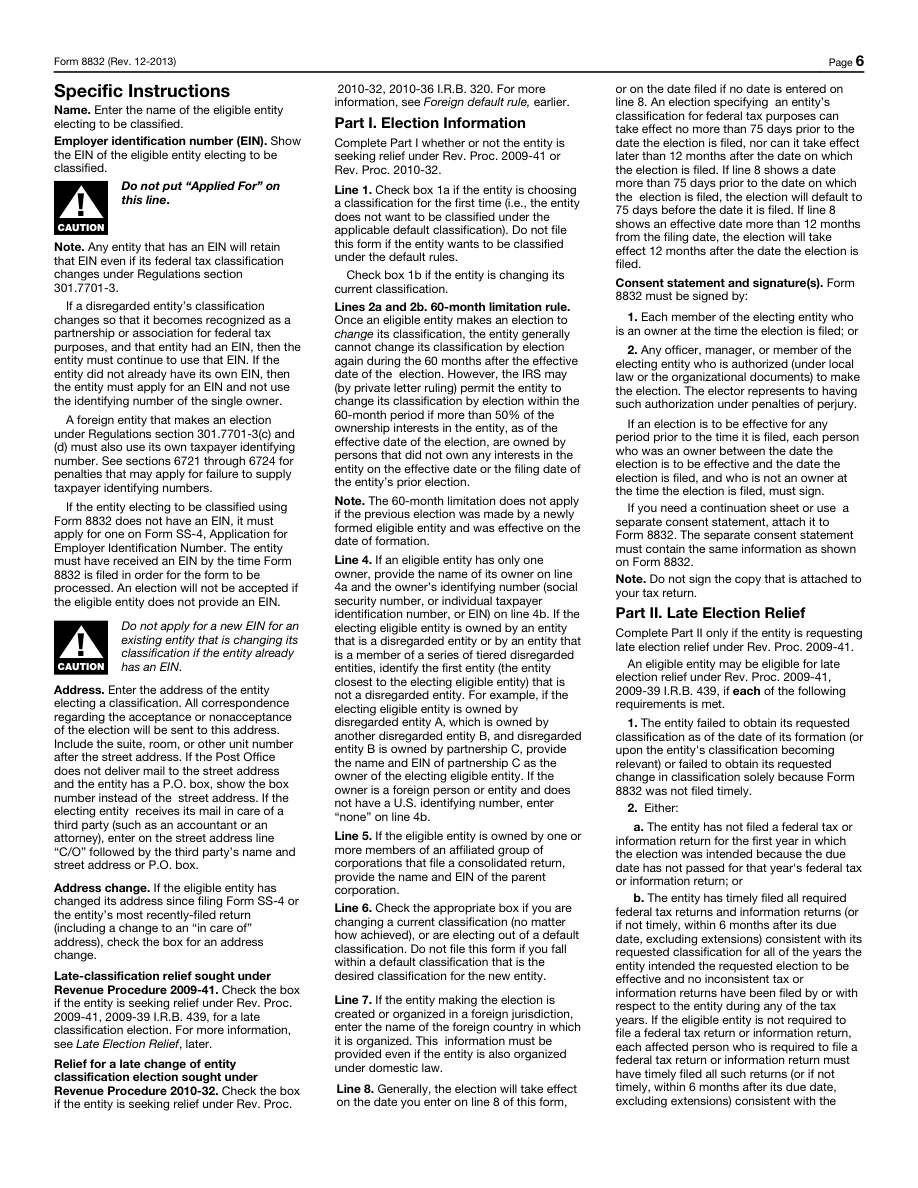
A company's formation papers, EIN notice and owner records may all contain official-looking numbers. The correct question is not which number looks most formal, but whose identity the particular IRS field asks for. Build an identifier crosswalk with columns for the form and line, the person or entity described, the required identifier type and the document supporting it. Keep a state-record number in the contextual file instead of assuming it belongs in an EIN field. This approach is especially useful when one preparation file covers SS-4, Form 5472, Form 8832 or a business update. It prevents an authentic identifier from being reused for the wrong party simply because it was easy to locate.[1, p.7] [2, p.4] [2, p.5]
Which facts change the answer?
Form 8832 requires the entity's own EIN and does not accept Applied For; an entity that already has an EIN retains it after a classification change. Form 5472 likewise distinguishes the reporting entity's EIN from foreign-owner identification. Its applicable foreign-shareholder reference ID and FTIN fields have their own rules. The foreign-owned U.S. DE instruction allowing None or N/A when an owner has no FTIN is not a general permission to leave every identification field blank. SS-4's foreign or N/A exception separately requires that the responsible party neither has nor is eligible to obtain an SSN or ITIN.[1, p.7] [2, p.4] [2, p.5]
The official requirements, compared
| Question or field | Official instruction | Conditions and limits | Source |
|---|---|---|---|
| Ein required | Form 8832 requires the entity's own EIN; Applied For is not accepted. An entity that already has an EIN retains that EIN after a classification change. | — | [1, p.7] |
| Reference id when missing us id | When the applicable foreign shareholder has no U.S. identifying number entered in Part II, use the reference ID required by the instructions. The reporting entity or its representative creates this ID; it is not a separate IRS application. | — | [2, p.4] |
| De ftin none | A foreign-owned U.S. DE reports its direct and ultimate foreign owners' FTINs, if any. If an owner has no FTIN, enter "None" or "N/A" in that field. Different reporting-entity rules must be checked separately. | Foreign-owned U.S. disregarded entity. | [2, p.5] |
| Previous ein disclosure | Line 18 asks whether the applicant previously received an EIN. If Yes, enter that prior EIN. | — | [3, p.1] |
| Id exception | Enter foreign or N/A on line 7b only when the responsible party neither has nor is eligible to obtain an SSN or ITIN. The line must contain an entry. | The responsible party does not have an SSN or ITIN. The responsible party is not eligible to obtain an SSN or ITIN. | [4, p.3] |
| Official field 5472 1b: Employer identification number | Enter the reporting entity's EIN, not its owner's identifying number. | — | [5, p.1] |
Read the requirements in context
Official field 5472 4b(1): U.S. identifying number, if any
If there is a U.S. identifying number, enter an SSN or ITIN for an individual, or an EIN for another entity.[5, p.1] [2, p.4]
Official field 5472 4b(2): Reference ID number (see instructions)
An applicable foreign shareholder without a U.S. identifying number uses a reference ID: letters, numbers or both, no more than 50 characters, and consistent across years.[5, p.1] [2, p.4]
Official field 5472 4b(3): Foreign taxpayer identification number (FTIN), if any
A foreign-owned U.S. DE enters the foreign owner's FTIN, if any, or "None" or "N/A" when there is none. Check the different rules for other filers.[5, p.1] [2, p.5]
Official field 8822-B 4b: Employer identification number
Enter the business's EIN.[6, p.1]
A worked preparation example
This example is hypothetical; it shows how to organize the facts, not an agency decision.
Imagine a preparer receives an LLC EIN notice, the owner's foreign tax record and a state formation receipt. The crosswalk first puts the LLC's EIN against fields asking for the business or reporting entity. It then creates a different row for a Form 5472 Part II owner field. If the applicable foreign shareholder has no U.S. identifying number entered there, the preparer records the required reference-ID question rather than borrowing the LLC's EIN. The reporting entity or its representative creates that reference ID; it is not a separate IRS application. Another row records whether the foreign owner has an FTIN and the particular DE instruction that governs an absent FTIN. A state reference stays labelled by its source and purpose so it cannot drift into an IRS identifier field during copying. An unresolved owner-identification issue remains visible. The exercise does not invent an SSN, assume eligibility for an ITIN or treat the absence of one number as permission to substitute any other available number. It produces a field-specific map that another person can audit against the original documents.[1, p.7] [2, p.4] [2, p.5]
Turn the records into a usable filing plan
Review the crosswalk by party and by field before populating forms. For an individual with a U.S. identifying number in the relevant Form 5472 field, the instructions distinguish SSN or ITIN from the EIN used for another entity. When a reference ID applies, preserve its permitted letter-and-number format, length limit and continuity across years rather than generating a new label casually for each file. None, N/A and Applied For are not interchangeable descriptions of uncertainty; each must be evaluated under the instruction for the particular field. The completed crosswalk should show both confirmed identifiers and unresolved questions without exposing a conclusion that the evidence cannot support. SpeedEIN may assess relevant EIN-record or preparation assistance within its service scope, but this organizational method does not promise a new IRS number, create owner tax-ID eligibility or replace the rules of the other forms being reviewed.[1, p.7] [2, p.4] [2, p.5]
Three checks before you proceed
- For every populated field, is the identifier tied to the specific entity or individual that the field describes?
- Are an absent FTIN, an absent U.S. owner ID and the conditional SS-4 exception treated as different questions?
- Can each reference ID and existing EIN be traced to its origin without substituting a state reference or another party's number?
Related preparation guides
- Foreign, None, N/A or a Reference ID? Missing-Number Instructions Differ by Form
- Two EIN Numbers Appear in One LLC's Records: Build an IRS Identity Reconciliation File
- If the Responsible Party Already Has an ITIN: Keep It Separate From the LLC’s EIN
Official sources and document versions
Official source versions checked: 2026-11-10
- Form 8832 (Rev. December 2013) — Rev. December 2013
- Instructions for Form 5472 (Rev. December 2024) — Rev. December 2024
- Form SS-4 (Rev. December 2025) — Rev. December 2025
- Instructions for Form SS-4 (Rev. December 2025) — Rev. December 2025
- Form 5472 (Rev. December 2023) — Rev. December 2023
- Form 8822-B (Rev. December 2019) — Rev. December 2019
Get help with the relevant SpeedEIN service
SpeedEIN provides preparation and support within the scope described on its service pages. Review the supported entity types, required information and current service scope before ordering. IRS decisions, processing and any applicable filing or payment obligations remain governed by the official rules.