An Entity Classification Is Not a FATCA Certification: Keep the Two Questions Separate
· 6 min read
The answer for this situation
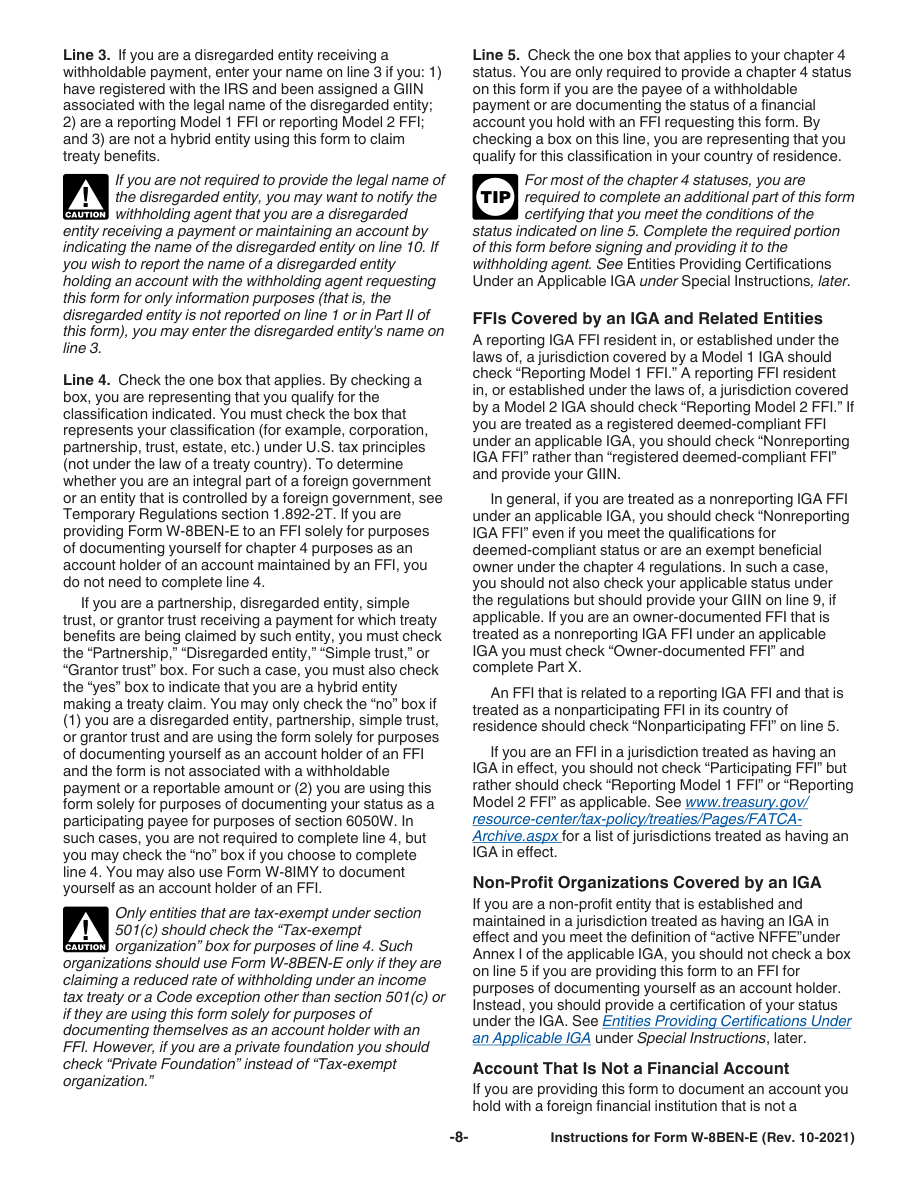
A company can have an EIN, a formation certificate and a clear record of its federal tax classification, yet still face a different question on a withholding certificate. The terminology can make these records look interchangeable. A local company label, a U.S. tax classification and a Chapter 4 certification answer different inquiries. Create an issue list that identifies which question the requesting document is actually asking. Its purpose is to prevent an owner or preparer from treating a completed entity-election task as a determination of every later certificate status, or from assuming that an ordinary business description settles a certification that contains its own tests.[1, p.8] [2, p.4]
Which facts change the answer?
The W-8BEN-E instructions distinguish U.S. tax principles for the Chapter 3 classification from the factual conditions of Chapter 4 status. The Active NFFE certification involves both specified passive-income and passive-asset tests; merely saying the company is operating is insufficient. Passive NFFE certification has its own applicable status and substantial-U.S.-owner statements. Disregarded-entity and hybrid-entity name instructions also require their stated distinctions. This article does not identify the correct FATCA category for every entity or cover financial institutions, special trusts or treaty structures. It explains a handoff issue encountered alongside business identification or a supported election, not an additional certification service. For Active NFFE, the specified tests require less than 50% passive gross income for the preceding calendar year and less than 50% passive-income-producing or held-for-production assets, measured using the weighted average of quarterly percentages. Apply the instructions' passive-income definition and the full certification conditions.[1, p.8] [2, p.4]
The official requirements, compared
| Question or field | Official instruction | Conditions and limits | Source |
|---|---|---|---|
| Chapter3 us tax classification | The Chapter 3 entity classification is determined under U.S. tax principles rather than simply copying a foreign local-law label. | — | [1, p.8] |
| Chapter4 status condition | Form W-8BEN-E line 5 requires the applicable chapter 4 status when the entity is the payee of a withholdable payment or is documenting a financial account held with an FFI requesting the form. Checking a box represents qualification for that classification in the country of residence. | Complete the corresponding certification based on the actual status; a commercial company label alone does not establish NFFE or FFI status. | [1, p.8] |
| Not entity election | Checking an entity-type box on SS-4 is not itself an entity-classification tax election. | — | [2, p.4] |
| Active nffe two tests | The Active NFFE certification in Form W-8BEN-E Part XXV requires a foreign entity that is not a financial institution and both the passive-income and passive-asset tests. | Less than 50% of gross income for the preceding calendar year is passive income. Less than 50% of assets produce or are held to produce passive income, calculated using a weighted average of passive-asset percentages measured quarterly. Apply the instructions’ definition of passive income and all conditions of the certification. | [3, p.7] |
| Passive nffe certification | Form W-8BEN-E Part XXVI requires the applicable Passive NFFE status certification and the applicable ownership statement in 40b or 40c. | The certification describes a foreign entity that is not a financial institution, with the stated exception for an investment entity organized in a U.S. possession, and is not claiming one of the other NFFE categories listed in 40a. Under 40b certify no substantial U.S. owners, or no controlling U.S. persons if applicable; under 40c provide the required names, addresses and TINs in Part XXIX. Determine which statement applies; foreign status alone does not remove the required ownership certification or disclosure. | [3, p.7] |
| Owner name for de | A disregarded entity or branch generally enters its owner's or parent entity's legal name on line 1, looking through multiple disregarded entities where applicable. A disregarded hybrid entity claiming treaty benefits follows its separate special instructions. | A hybrid entity’s treaty claim follows the separate special instructions. | [1, p.7] |
Read the requirements in context
Domestic default
Without an election, a domestic eligible entity with two or more members generally defaults to a partnership; one with a single owner generally defaults to a disregarded entity.[4, p.5]
Return copy
In addition to filing Form 8832 separately, attach a copy to the entity's return for the election year as instructed, or to the applicable direct or indirect owner's return if the entity has no return-filing obligation.[4, p.6]
A worked preparation example
This example is hypothetical; it shows how to organize the facts, not an agency decision.
Imagine a hypothetical foreign company, Blue Finch Studio Ltd, that owns a U.S. subsidiary. Its records include local formation papers, an EIN letter and material about the subsidiary's classification. A payer's questionnaire then asks for a Chapter 4 status. The office coordinator initially suggests selecting an active category because the business has employees and sends invoices. Instead, the coordinator creates a three-column question map. One column identifies the local-law entity and its owner. A second identifies the relevant U.S. tax classification and the documents actually supporting it. A third records the certificate status being requested, the conditions to examine and the missing financial or ownership information. The coordinator does not move an answer from the classification column into the certification column. If an Active NFFE statement is proposed, both specified tests need the applicable review; business activity alone does not complete that work. If another status is relevant, the required statements and ownership questions must be considered on their own terms. The resulting file lets the appropriate adviser see what the earlier EIN or election project established and what it did not establish. The hypothetical structure is not presented as eligible for SpeedEIN's simplified individual-owner annual package, and the example supplies no final certification or withholding conclusion.[1, p.8] [2, p.4]
Turn the records into a usable filing plan
Keep the certificate request with a short description of the entity and ownership facts, rather than sending only the EIN or an election copy. Ask which unanswered question prevents completion and which documents are needed to assess it. Do not check a category solely to make a draft appear finished. SpeedEIN's standard Form 8832 service has a specific single-individual-owner U.S.-LLC scope and does not provide a choice-of-treatment or FATCA-classification opinion. An existing entity with a different ownership structure should be reviewed against the actual service limits before ordering. Where certificate work is needed, use the applicable instructions and qualified advice instead of interpreting a business-formation document as a universal tax-status certificate.[1, p.8] [2, p.4]
Three checks before you proceed
- Is the request about local entity form, U.S. tax classification or a separate Chapter 4 certification?
- Have the actual certification conditions been reviewed rather than inferred from business activity?
- Does the proposed task fit the stated SpeedEIN service scope, or require separate specialist work?
Related preparation guides
- An EIN Does Not Approve Treaty Benefits: Separate Assignment From Tax Certification
- A Mailing Address and a Permanent-Residence Address: Keep the Certifications Separate
- Do Not Use an EIN Application to Make a Corporate Tax Election
Official sources and document versions
Official source versions checked: 2026-11-10
- Instructions for Form W-8BEN-E (Rev. October 2021) — Rev. October 2021
- Instructions for Form SS-4 (Rev. December 2025) — Rev. December 2025
- Form W-8BEN-E (Rev. October 2021) — Rev. October 2021
- Form 8832 (Rev. December 2013) — Rev. December 2013
Get help with the relevant SpeedEIN service
SpeedEIN provides preparation and support within the scope described on its service pages. Review the supported entity types, required information and current service scope before ordering. IRS decisions, processing and any applicable filing or payment obligations remain governed by the official rules.