Build One Deadline Register Without Mixing Original, Extended and Notice Dates
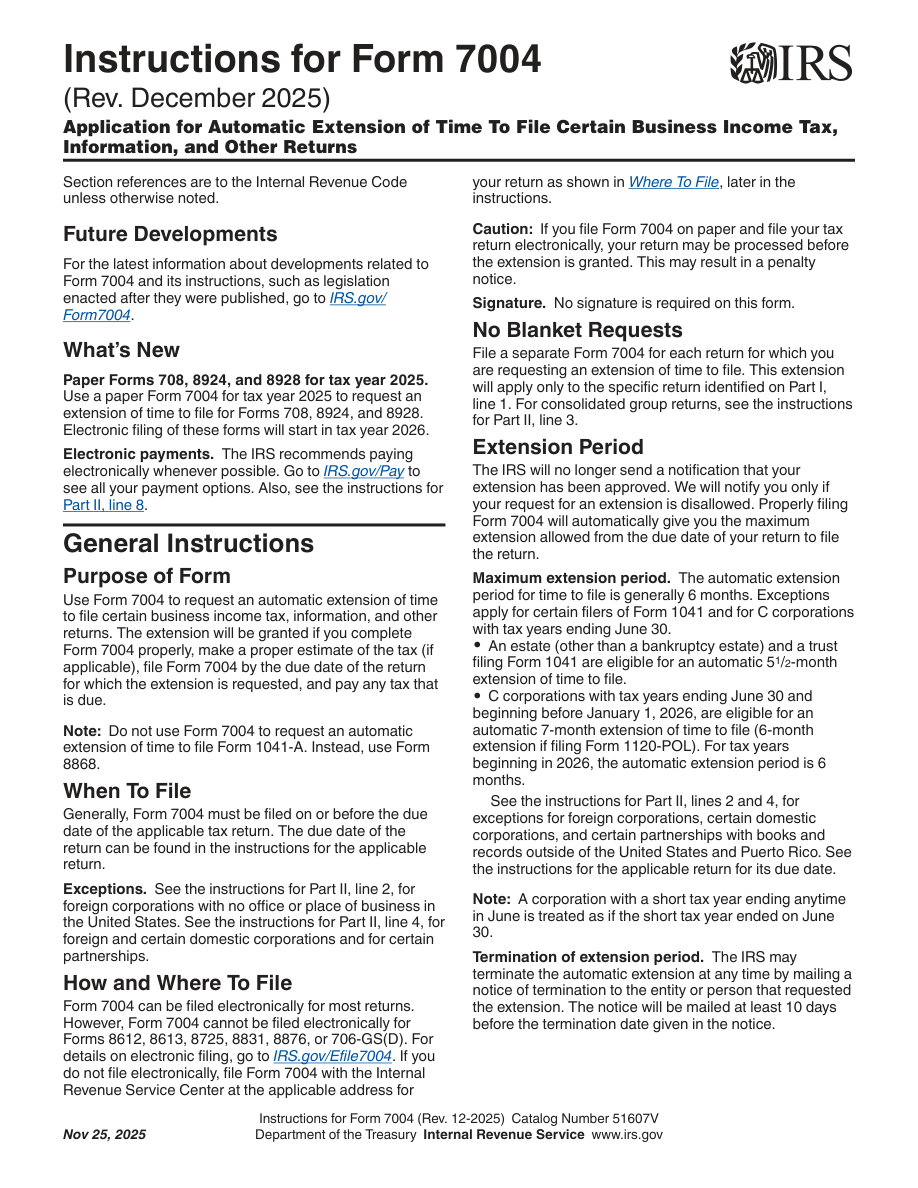
· 6 min read
The answer for this situation
A useful deadline register gives every date a specific job. Record the taxpayer, form or notice, period, governing source and action next to the date, then distinguish an original filing deadline from any supported extended deadline and any separate notice-related event. A single entry called tax day can hide several different questions. The register should also show whether a date has been verified or is merely an assumption inherited from an organizer. This makes it possible to coordinate preparation without treating every document in a folder as if the same clock governs it. The goal is a labelled calendar that can be checked against the applicable instructions, not a universal timetable assembled by copying a prominent date from a general publication or a previous year.[1, p.1] [2] [3]
Which facts change the answer?
The collected Publication 509 is the 2026 edition and has stated coverage limits; it is not a complete calendar for every international tax situation or another calendar year. The weekend and legal-holiday rule also has conditions, including limits on the relevant state-holiday provision. Continuing-failure notice timing must not be accrued directly from an original return deadline, and its reasonable-cause qualifications remain relevant. This article does not calculate a specific due date without the required facts or turn an internal reminder into a legal extension. The applicable source controls each separate action.[1, p.1] [2] [3]
The official requirements, compared
| Question or field | Official instruction | Conditions and limits | Source |
|---|---|---|---|
| Original due date | Form 7004 generally must be filed on or before the original due date of the return being extended. Check that return's specific instructions for its original deadline. | — | [1, p.1] |
| Weekend legal holiday | When the final day for an act under federal tax law falls on a Saturday, Sunday or applicable legal holiday, performing it on the next day that is none of those is timely. The final day includes an approved extension. Legal holidays generally mean District of Columbia holidays, with the specified statewide-holiday rule also applying to certain offices outside D.C. | The final deadline is determined under federal tax law. The state-holiday branch applies only to the offices outside D.C. and within an internal revenue district specified by the statute for receipt or performance. An arbitrary local holiday or a holiday where the individual happens to be located does not automatically support an extension. | [2] |
| Continuation penalty notice clock | If the relevant failure continues more than 90 days after the IRS mails a failure notice, an additional $25,000 may apply for each affected related party for each 30-day period. A fraction of 30 days counts as a full period. | The relevant failure continues more than 90 days after the IRS mails its notice. The amount here applies to tax years beginning on or after January 1, 2018. The relevant clock starts with the IRS mailing the failure notice; do not accrue this additional penalty directly from the original filing due date. Determine the reasonable-cause period and treatment of a second failure under Regulations section 1.6038A-4(b) and (d), respectively. Under Regulations section 1.6038A-4(b)(1), the 90-day period cannot begin earlier than the last day on which the IRS determines that reasonable cause existed. The IRS determines reasonable cause and its duration; making a request does not automatically stop the clock. | [3] |
| Separate return | File a separate Form 7004 for each type of return requiring an extension. The extension applies only to the form selected on Part I, line 1. | — | [1, p.1] |
| Year and three calendars | The collected Publication 509 is the 2026 edition for use in 2026. It contains general tax, employer tax and excise tax calendars. Match the calendar year explicitly to the filing year being discussed. | The collected 2026 edition of Publication 509 is being used. Do not copy its dates unconditionally into 2027 or another year's calendar. | [4] |
| Scope exclusions | Publication 509 does not cover employment-tax or excise-tax deposit rules. It also does not fully cover filing and other requirements for estate and gift taxes, trusts, exempt organizations, certain corporations, foreign partnerships and nonresident aliens. It is not a complete calendar for every international tax situation. | Publication 509 is being used to define an article's calendar coverage. | [4] |
Read the requirements in context
De proforma required
A foreign-owned U.S. DE subject to Form 5472 filing attaches Form 5472 to a pro forma Form 1120 and files by the Form 1120 due date, including a valid extension.[5, p.2]
Records sufficiency
Keep permanent books and records sufficient to establish the correctness of the federal return and the treatment of related-party transactions, together with the detailed requirements of Regulations section 1.6038A-3.[5, p.3]
A worked preparation example
This example is hypothetical; it shows how to organize the facts, not an agency decision.
Suppose a hypothetical owner has a general 2026 calendar, an annual DE preparation folder, a Form 7004 record and an IRS notice. The owner initially creates one reminder and assumes it covers them all. A deadline register separates the items. The annual-return row identifies the relevant return and period and asks what supports the original deadline. The extension row records its own task and the evidence supporting any effect on the selected return. The notice row identifies the particular event and instruction being reviewed instead of copying the return's date. The general publication is recorded with its year and scope, so its dates are not rolled unconditionally into a 2027 plan. If a holiday adjustment is proposed, the owner asks which legal rule and applicable holiday support it, rather than relying on a day off where the owner lives. Any continuing-failure question stays connected to the relevant notice and qualifications. This hypothetical calendar produces distinct actions and unresolved questions, not a new deadline for every item or a promise that one filing event stops every other clock.[1, p.1] [2] [3]
Turn the records into a usable filing plan
Separate internal target dates from legally governing dates. A preparer may set a material-delivery target for its workflow, but that target should not be presented as a government deadline or as evidence that an extension exists. Keep the source and the basis for each calendar entry available, and identify who is checking unresolved items. When a new document arrives, determine which row it affects instead of moving all reminders together. If the year or filing context changes, recheck the source rather than simply relabelling the old calendar. SpeedEIN can assess relevant preparation assistance within its stated service scope, while the official rules determine timeliness and the owner remains responsible for applicable obligations. The register is useful because it preserves those distinctions instead of replacing them with a broad service promise or a reassuring but unsupported date.[1, p.1] [2] [3]
Three checks before you proceed
- What taxpayer, action, form or notice and period does each individual date govern?
- Does each original, extended or notice-related entry have its own source and factual basis?
- Have publication-year limits, scope exclusions and the actual holiday or continuing-notice conditions been checked rather than assumed?
Related preparation guides
- A Fax Failed Near the Filing Deadline: Preserve the Error and Plan the Next Step
- Mailing From Abroad: Do Not Confuse an Overseas Postmark With the U.S. Mailing Rule
- When a Filing Deadline Falls on a Weekend or Legal Holiday
Official sources and document versions
Official source versions checked: 2026-11-10
- Instructions for Form 7004 (Rev. December 2025) — Rev. December 2025
- 26 U.S.C. § 7503: Time for performance of acts where last day falls on Saturday, Sunday, or legal holiday
- 26 CFR 1.6038A-4 Monetary penalty for failure to furnish information or maintain records — 2026-11-05
- Publication 509 (2026), Tax Calendars
- Instructions for Form 5472 (Rev. December 2024) — Rev. December 2024
Get help with the relevant SpeedEIN service
SpeedEIN provides preparation and support within the scope described on its service pages. Review the supported entity types, required information and current service scope before ordering. IRS decisions, processing and any applicable filing or payment obligations remain governed by the official rules.