The LLC's Extension and the Owner's Return Are Different Filing Jobs
· 5 min read
The answer for this situation
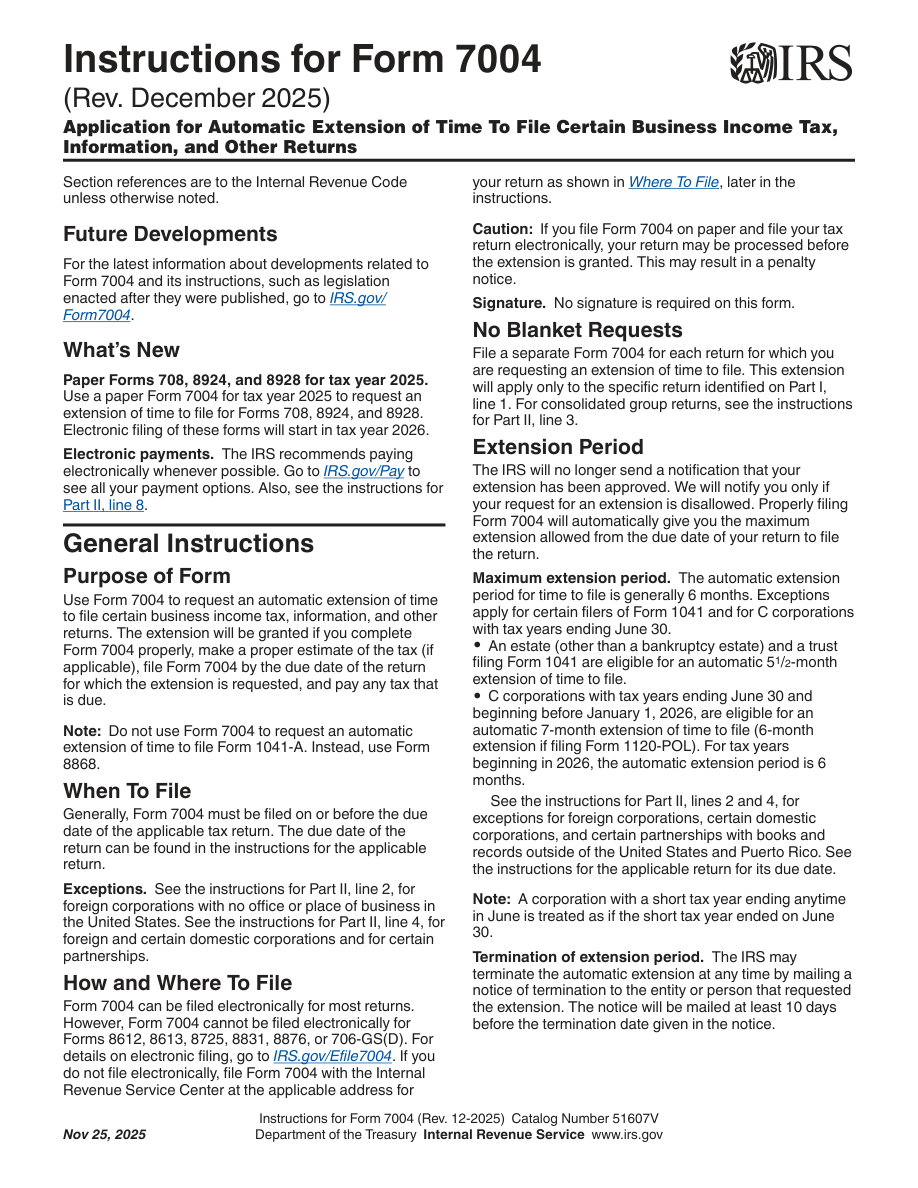
Write the taxpayer, return and period next to an extension request before describing it as the business's taxes are extended. Form 7004 applies to the return selected on it, not automatically to every return or tax question connected with an LLC and its owner. A responsibility matrix can separate the entity's supported reporting package from any owner-level matter that needs independent review. It should identify who is handling each task and what evidence supports its current status. This also prevents the special reporting treatment of a foreign-owned DE from being mistaken for a complete answer about the owner's own filing position. The matrix does not create a personal filing duty; it makes clear that an entity-extension order has not resolved that separate question.[1, p.1] [1, p.2] [2, p.2]
Which facts change the answer?
The selected instructions distinguish the return being extended, the special DE reporting context and its tax-year rule. They also state that Form 7004 does not extend payment time. Those limits should remain visible when planning work across an entity and its owner. This article does not determine whether the owner must file a particular personal return, identify a personal extension procedure or offer personal-return preparation. It does not treat a filing extension as completion of the underlying return. Owner-level advice, where needed, belongs to its own appropriately scoped work rather than being inferred from an entity service.[1, p.1] [1, p.2] [2, p.2]
The official requirements, compared
| Question or field | Official instruction | Conditions and limits | Source |
|---|---|---|---|
| Separate return | File a separate Form 7004 for each type of return requiring an extension. The extension applies only to the form selected on Part I, line 1. | — | [1, p.1] |
| Not payment extension | Form 7004 does not extend the deadline for paying tax due. | — | [1, p.2] |
| De proforma required | A foreign-owned U.S. DE subject to Form 5472 filing attaches Form 5472 to a pro forma Form 1120 and files by the Form 1120 due date, including a valid extension. | — | [2, p.2] |
| Foreign owned us de definition | A foreign-owned U.S. disregarded entity is a domestic disregarded entity wholly owned by a foreign person. Its treatment as a corporation for these purposes is limited to the reporting requirements related to section 6038A. | — | [2, p.2] |
| De tax year | A foreign-owned U.S. DE uses the tax year its owner uses for U.S. tax filing. If the owner does not have such a tax year, the DE uses a calendar year. | — | [2, p.2] |
| Foreign owned de special route | A foreign-owned U.S. disregarded entity extending its Form 5472/pro forma 1120 package uses the Form 1120 code on line 1, writes Foreign-owned U.S. DE across the top and follows the special fax or mailing route in the Form 5472 instructions, rather than ordinary Form 7004 addresses. | The filer is a foreign-owned U.S. disregarded entity. The extension concerns its Form 5472/pro forma 1120 package. | [2, p.3] [2, p.2] [3, p.1] |
Read the requirements in context
Official field 7004 Header name / identifying number: Name Identifying number
Enter the name and EIN or other applicable identifying number, checking them against IRS records.[3, p.1] [1, p.2]
Original due date
Form 7004 generally must be filed on or before the original due date of the return being extended. Check that return's specific instructions for its original deadline.[1, p.1]
A worked preparation example
This example is hypothetical; it shows how to organize the facts, not an agency decision.
Suppose a hypothetical owner receives confirmation that a preparer worked on the LLC's Form 7004 and tells another adviser that all tax deadlines are now handled. To clarify the position, the owner creates a matrix with separate rows for the entity package, the extension request and the owner-level question. The selected return and period are copied from the retained application into the relevant row, while any evidence of submission is recorded as a distinct status. The owner-level row identifies which adviser, if any, is reviewing that matter and leaves its filing or extension position unresolved until supported. A payment question is not labelled postponed merely because an extension draft exists. If the DE's reporting-year facts need confirmation, that issue is added to the entity row rather than answered by the owner's informal description of a personal deadline. This hypothetical matrix prevents one task's progress from silently completing another task. It does not say that the owner necessarily owes tax, requires a personal return or can use the entity's application to obtain any particular personal filing relief.[1, p.1] [1, p.2] [2, p.2]
Turn the records into a usable filing plan
When reviewing the matrix, ask each provider to state the exact work accepted and the milestone actually reached. Prepared, submitted and underlying return completed should remain different descriptions. Avoid giving an entity preparer responsibility for an owner-level task that was never agreed, or telling another adviser the entire position is covered without specifying the form. Keep payment timing separate from filing timing, and preserve any unresolved questions instead of treating a shared tax year as proof of shared obligations. SpeedEIN's supported extension service concerns its stated entity-package scope and applicable original deadline. It should not be advertised as personal-return or personal-extension work, a payment extension or a guarantee that every later obligation is satisfied. The useful service handoff is a precise description of the entity job and a clear boundary around any separate owner question.[1, p.1] [1, p.2] [2, p.2]
Three checks before you proceed
- Which taxpayer, selected return and period does the actual Form 7004 identify?
- Who is reviewing any separate owner-level position, without assuming that an entity extension decides it?
- Are payment timing, extension preparation, submission and completion of the eventual return recorded as different matters?
Related preparation guides
- The Extension Was Requested: Define the Remaining Annual-Filing Deliverables
- Changing Preparers After Requesting an Extension: Transfer the Filing Evidence
- One Form 7004 Per Return: Prepare Separate Entity and Period Records
Official sources and document versions
Official source versions checked: 2026-11-10
- Instructions for Form 7004 (Rev. December 2025) — Rev. December 2025
- Instructions for Form 5472 (Rev. December 2024) — Rev. December 2024
- Form 7004 (Rev. December 2025) — Rev. December 2025
Get help with the relevant SpeedEIN service
SpeedEIN provides preparation and support within the scope described on its service pages. Review the supported entity types, required information and current service scope before ordering. IRS decisions, processing and any applicable filing or payment obligations remain governed by the official rules.