Form 8832 and Form 7004 Run on Different Clocks
· 5 min read
The answer for this situation
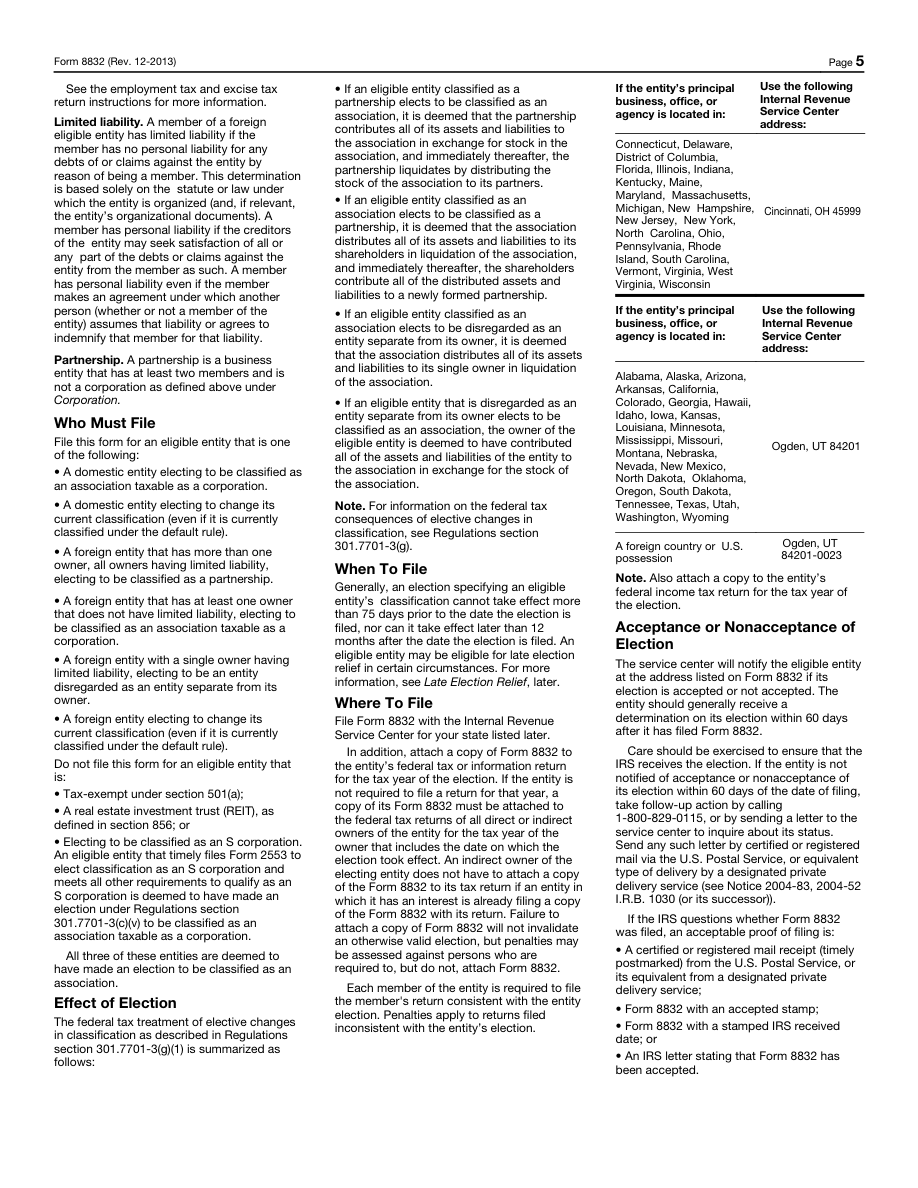
Put the Form 8832 election timeline and the Form 7004 return-extension timeline next to each other, but do not combine them into one deadline. The ordinary election's effective-date limits and the extension request's original-return-deadline rule address different actions. A planning sheet should identify which document is being filed, which date is intended to matter and what official instruction supports it. It should also show any earlier election history that may affect the classification-change question. This prevents a return extension from being treated as automatic extra time for an election, or a copy attached to a return from being treated as a substitute for the separate election filing. The useful outcome is a two-track chronology for a reader who has already obtained appropriate advice about the intended treatment, not a recommendation to elect a particular classification.[1, p.6] [2, p.1]
Which facts change the answer?
The selected sources describe ordinary Form 8832 timing and the relevant prior-election limitation, with exceptions considered separately. Part II information for late-election relief does not establish eligibility merely because it is completed. Form 7004 concerns its selected return and has its own timing requirement. This article does not recommend corporate or S treatment, obtain late-election relief or decide an election's validity. Any service discussion must stay within the stated scope for a supported standard election after the reader has chosen treatment with an adviser, rather than advertising tax planning or a late-relief service.[1, p.6] [2, p.1]
The official requirements, compared
| Question or field | Official instruction | Conditions and limits | Source |
|---|---|---|---|
| Effective window | An ordinary Form 8832 effective date generally cannot precede filing by more than 75 days or follow filing by more than 12 months. Late-election relief is a separate exception requiring its own review. | An ordinary Form 8832 election. Late-election relief for applicants meeting its conditions. | [1, p.6] |
| Original due date | Form 7004 generally must be filed on or before the original due date of the return being extended. Check that return's specific instructions for its original deadline. | — | [2, p.1] |
| Separate return | File a separate Form 7004 for each type of return requiring an extension. The extension applies only to the form selected on Part I, line 1. | — | [2, p.1] |
| 60 month change limit | A prior classification election effective within the preceding 60 months generally restricts another classification change. Apply the instructions' exceptions separately, including an initial election by a newly formed entity effective on its formation date. | — | [1, p.2] [1, p.7] |
| Return copy | In addition to filing Form 8832 separately, attach a copy to the entity's return for the election year as instructed, or to the applicable direct or indirect owner's return if the entity has no return-filing obligation. | — | [1, p.6] |
| Late relief conditions | Form 8832 Part II contains the explanation and declaration for late-election relief. Completing it does not by itself establish eligibility for relief. | — | [1, p.4] |
Read the requirements in context
De proforma required
A foreign-owned U.S. DE subject to Form 5472 filing attaches Form 5472 to a pro forma Form 1120 and files by the Form 1120 due date, including a valid extension.[3, p.2]
De tax year
A foreign-owned U.S. DE uses the tax year its owner uses for U.S. tax filing. If the owner does not have such a tax year, the DE uses a calendar year.[3, p.2]
A worked preparation example
This example is hypothetical; it shows how to organize the facts, not an agency decision.
Imagine a hypothetical single-individual-owner LLC whose owner has discussed a classification choice with an adviser while annual preparation is also underway. The owner assumes that requesting more time for the annual return moves every election-related date. A two-track sheet separates the proposed Form 8832 filing and effective-date question from the Form 7004 task and the return it selects. The owner records the available prior-election information instead of assuming that a new document can freely reset the classification history. A return-copy task is shown as distinct from filing the election separately. If the intended election timing falls outside the ordinary rules, the owner labels that as a separate relief question for appropriate review, not as a problem solved by the extension. The annual DE reporting context is considered only where its actual facts apply. This hypothetical plan does not decide whether the selected treatment is advantageous, establish eligibility for late relief or guarantee that an election takes effect. It makes the dependencies and the different clocks visible before preparation begins from an unsupported timing assumption.[1, p.6] [2, p.1]
Turn the records into a usable filing plan
For each track, preserve the document, intended action, relevant period or effective date and unresolved factual basis. Review a change to either plan against its own instructions rather than moving all dates together. Keep the adviser's treatment decision separate from the preparation service's task and from any government determination. If an exception is being considered, identify it explicitly and obtain the review it needs instead of using the ordinary timeline as if the exception had already been granted. SpeedEIN's relevant business-update or standard-election assistance should be assessed only within its stated supported individual-owner scope after the treatment decision is made. It is not an offer of S-election work, late relief or a tax-planning recommendation, and an annual-return extension should not be sold as solving those separate questions.[1, p.6] [2, p.1]
Three checks before you proceed
- Which dates govern the separate election filing, intended effective date and selected-return extension task?
- Have prior elections, applicable exceptions and the return-copy requirement been checked without merging them into the annual extension?
- Is any late-relief or treatment-advice issue explicitly outside the standard preparation task rather than assumed solved?
Related preparation guides
- Track a Form 8832 Decision From Mailing Evidence to the IRS Letter
- Returning to Disregarded Treatment: Prepare the Prior-Election and Adviser File First
- Form 8832 Effective Date: The Ordinary 75-Day Lookback and 12-Month Limit
Official sources and document versions
Official source versions checked: 2026-11-10
- Form 8832 (Rev. December 2013) — Rev. December 2013
- Instructions for Form 7004 (Rev. December 2025) — Rev. December 2025
- Instructions for Form 5472 (Rev. December 2024) — Rev. December 2024
Get help with the relevant SpeedEIN service
SpeedEIN provides preparation and support within the scope described on its service pages. Review the supported entity types, required information and current service scope before ordering. IRS decisions, processing and any applicable filing or payment obligations remain governed by the official rules.